


A white BJJ gi is the safest first choice because almost every academy and tournament accepts white, while some schools limit blue or black to certain belts or classes. The trade-off is upkeep: wash it promptly after training, keep it out of direct heat, and treat collar stains early. White is the traditional and most widely accepted colour, which makes it a flexible option for a beginner. This guide covers why white is the default, what academies and events usually allow, how white compares with blue and black, and how to keep a white gi clean.
Key Takeaways
- Widely accepted: Almost every academy and tournament allows a white gi, which makes it the safest colour for a first purchase.
- Academy policies vary: Some schools restrict blue or black gis to certain belts or classes, so check your academy's policy before you buy.
- Federation rules: Federation rulebooks commonly allow white, blue and black gis for competition, but always verify the current rules before an event.
- White shows stains: A white gi needs prompt washing and attention to the collar to avoid yellowing and visible marks.
- Blue and black trade-offs: Blue hides marks better but can fade over time, while black can fade with hot washing in general.
- A second gi helps: Training often is easier with two gis, so one can dry while you wear the other.
Table of Contents
- Why white is the default first gi
- What academies and events usually allow
- White vs blue vs black for a beginner
- Keeping a white gi white
- Collar and lapel stains
- When to add a second colour
- Frequently Asked Questions
Why white is the default first gi
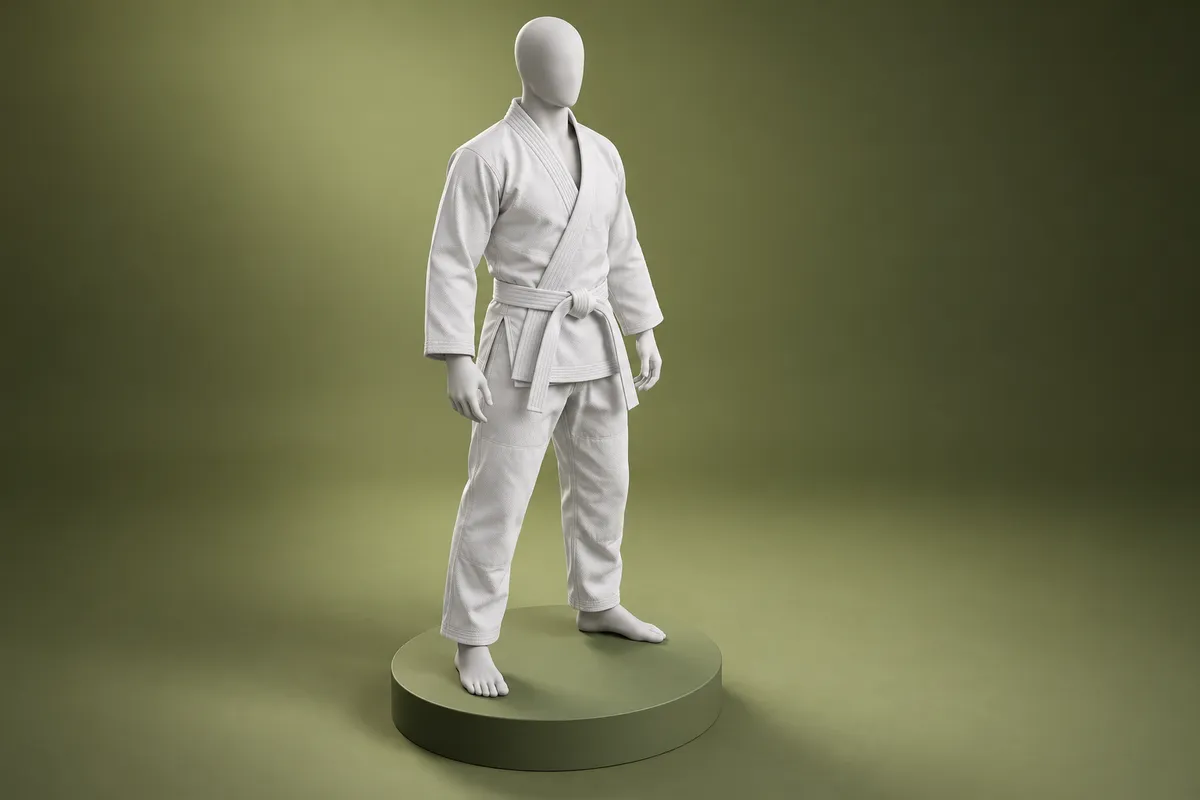
White gis are the default choice for beginners because they are widely accepted and traditional. Many academies lend white gis to new students, so everyone starts on an equal footing. A white gi is easy to match with a white belt, which is the starting belt in Brazilian jiu-jitsu. For these reasons, white is a neutral and practical choice for a first purchase.
White gis can be worn in almost any class, from beginner sessions to open mats. They are also the most common colour, which makes it easy to compare fit across brands. Starting in white avoids problems with colour restrictions inside the academy, so new students can focus on training, and the wider guide to choosing a first BJJ gi covers the other points to check.
Starting in white also keeps future options open. If your academy later allows other colours, a second gi can be blue or black without replacing the first.
What academies and events usually allow
Academy uniform policies vary, and many have rules on gi colour. Some academies require white gis for beginners, while others also allow blue or black. Some schools reserve certain colours, such as black, for instructors or advanced students. Always check your academy's policy before buying, which avoids awkwardness in your first classes.
For events, federation rules such as the IBJJF rulebook commonly allow white, blue and black gis for competition. These rules keep a consistent appearance at tournaments. Rules can change, so verify the current rulebook before an event. Smaller local events may have their own rules, so check with the organisers in advance.
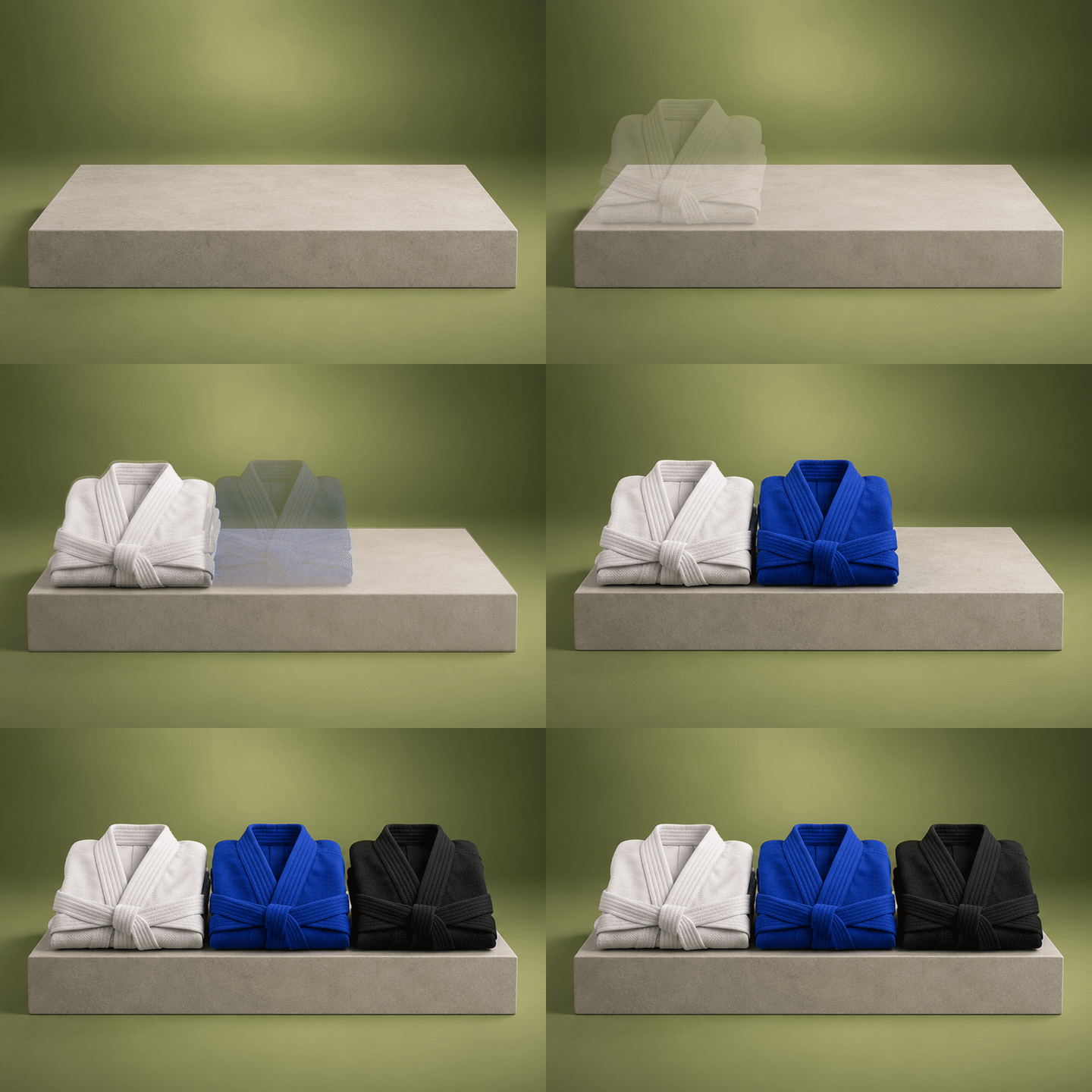
Personal preference also plays a part once the rules are clear. Blue gis hide sweat and marks better than white, which some people like if they train often. Black gis have a look some students prefer. Whatever the colour, the gi needs to meet the rules of your academy and the events you enter.
White vs blue vs black for a beginner
When deciding on a colour, consider the practical side of each. White gis show stains easily, so they need prompt washing to keep their appearance. Frequent training can lead to collar marks and yellowing, especially if the gi sits unwashed. Even so, white remains the safest choice for a beginner, which is why most first BJJ gis start there.
Blue gis are a common alternative for those who want a gi that hides marks. However, blue can fade over time with repeated washing, as dyed cotton generally does. To limit fading, follow the care label and avoid hot water and harsh detergents.
Black gis come with their own considerations. Black can also fade with hot washing, so treat it with care. Some academies reserve black gis for advanced students or instructors, so check the academy's policy before buying one.
| Gi colour | Generally accepted where | Upkeep in general |
|---|---|---|
| White | Most academies and events | Shows stains; wash promptly |
| Blue | Many academies and events | Hides marks; can fade |
| Black | Allowed in many events; some academies restrict it | Can fade with hot washing |
Keeping a white gi white
Keeping a white gi clean takes a little routine. Wash it as soon as possible after training so stains do not set. Use cold or cool water as the care label allows, because hot water can make cotton shrink and wears the fabric. Air dry it in a well-ventilated place, away from direct heat and strong sun, and skip fabric softener, which can leave residue in the weave.
A gentle, oxygen-based stain remover is a common general approach, but always check the care label first. Chlorine bleach can weaken or yellow cotton in general, so the care label decides. Washing whites separately from coloured kit prevents colour transfer and keeps the gi looking fresh.
Never leave your gi damp in a sealed bag after training, as this encourages odour and mildew. Hang it to air out in a well-ventilated place if you cannot wash it straight away. Keep it out of a hot car, where heat can help odours and stains set. Fold the gi only when it is fully dry, which prevents musty smells and keeps its shape.
Collar and lapel stains
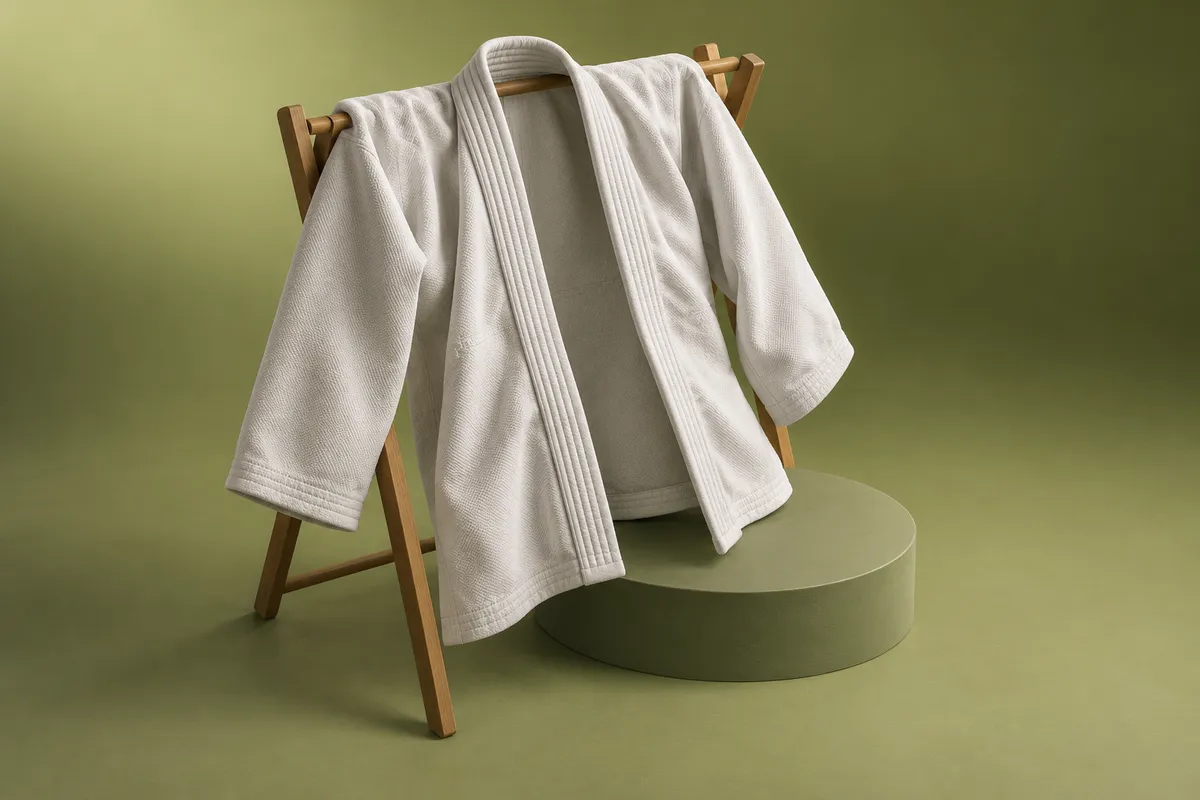
The thick collar and lapel collect sweat and skin oils, which can lead to stubborn marks. Pre-treating these areas before washing helps. Use a soft brush to gently work the lapel and loosen embedded dirt. Rinse thoroughly so detergent does not stay in the thick layers, and let the collar dry fully before storing the gi to prevent damp and mildew.
Regular pre-treatment and thorough rinsing are the two habits that keep a collar clean. The thick material needs a little extra attention, but the routine takes only a minute after each session.
Yellowing on the collar is usually a build-up over time rather than the result of one bad session. Catching it early with regular pre-treatment is much easier than trying to remove it later. Avoid very hot water as a fix, because it can set stains and shrink cotton in general. If stubborn marks persist, follow the care label or ask the seller what it recommends.
When to add a second colour
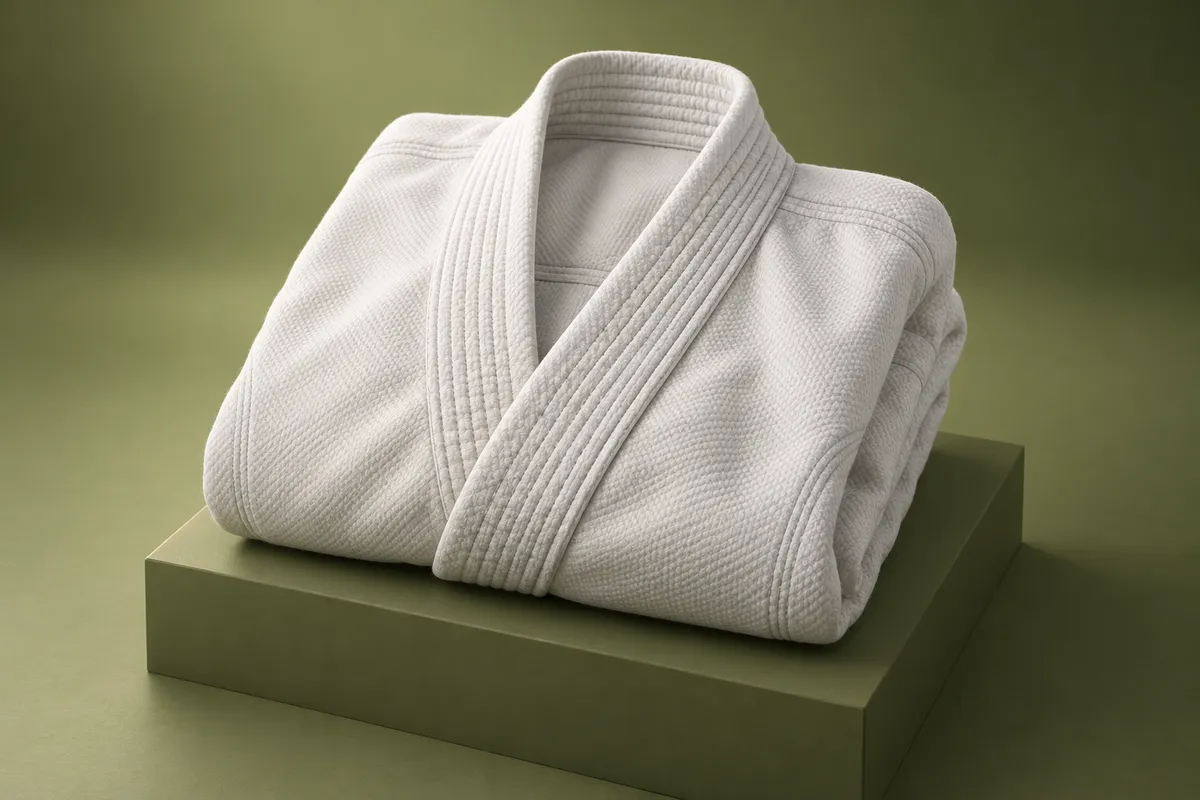
As you train more often, a second gi becomes useful. Check your academy's policy first, as some schools have colour requirements. Blue or black are common choices for a second gi if your academy allows them. Owning two lets one dry while you wear the other, and in the beginner range the Beginner Essential BJJ Gi is listed as a 380 GSM 100% cotton weave; read the listing for its colour options.
If you are still building your first kit, the First BJJ Gi Starter Set is listed as a cotton blend with a white belt in the title. A backup gi keeps a regular training routine going without waiting on the washing.
Frequently Asked Questions
How do I keep my BJJ gi white?
Wash your BJJ gi as soon as possible after training so stains do not set. Use cold or cool water and air dry it in a well-ventilated place away from direct heat and sunlight. Avoid fabric softener and pre-treat marks with a gentle, oxygen-based stain remover if the care label allows. Washing the gi separately from coloured items also helps it stay bright.
How do I keep my BJJ gi collar white?
Pre-treat the collar before every wash to lift sweat and skin oils. Use a soft brush to gently work the lapel, then rinse thoroughly so no detergent stays in the thick layers. Let the collar dry completely before you fold or store the gi. Regular pre-treatment and thorough rinsing are the habits that keep a collar clean.
How should I wash a white BJJ gi?
Wash it as soon as possible after training, using cold or cool water as the care label allows. Air dry it in a well-ventilated place away from direct heat and sunlight, rather than using a hot dryer. Avoid fabric softener, and use a gentle, oxygen-based stain remover for marks if the label allows. Wash it separately from coloured items to prevent colour transfer.
Can white belts wear a black or blue gi?
Whether white belts can wear a black or blue gi depends on the academy's policy. Many academies allow blue gis, while some reserve black gis for higher ranks or instructors. Federation rules commonly allow white, blue and black gis for competition. Always check with your coach before you buy a coloured gi.
Conclusion
A white BJJ gi is the safest first choice because it fits almost every academy and event rule. Keep it clean with prompt cold washes, air drying and a little attention to the collar. Check your academy's policy before adding a blue or black gi. A second gi in an allowed colour makes frequent training easier.


