


A personalized jiu jitsu gi usually means choosing the colour, trim and stitching, then adding a name, academy logo or patches in the zones the event rules allow. Before ordering, agree the artwork, placement, sizes and colours in writing, and check your academy's uniform policy and the current federation rulebook. Customisation can range from a simple contrast trim to a full design with detailed embroidery. Whether you are a practitioner, coach or academy owner, it helps to know what is realistic before you brief anyone, and the custom academy and club gis range shows the kinds of base gis academies start from.
Key Takeaways
- What it means: A personalized jiu jitsu gi lets you choose colours and trim and add a name or logo in specific areas of the jacket and pants.
- Embroidery vs patches: Embroidery is stitched into the fabric and stays flat and permanent, while sewn patches are separate fabric pieces that can be replaced.
- Where it goes: Common zones are the shoulders, back panel, sleeves and pants thigh, with a name sometimes placed inside the jacket.
- Grip areas: Heavy decoration on the collar and lapel is usually avoided, because those areas take grips in almost every exchange.
- Rules first: Check the current federation rulebook and your academy's uniform policy for colours and patch zones before you approve a design.
- Get it in writing: Agree the artwork file, placement proof, colours and size run in writing before any order is placed.
Table of Contents
- What 'personalized' can mean on a gi
- The parts you can customise
- Embroidery vs sewn patches
- Colour rules to check first
- Ordering for an academy or club
- A pre-order checklist
- Frequently Asked Questions
What 'personalized' can mean on a gi
Personalisation on a gi can vary widely, from small changes to a full custom design. At its most basic, it means choosing the gi's colour and trim. For a more personal touch, you can add your name, initials or an academy logo to specific areas of the parts of a BJJ gi. This can be done through embroidery or sewn patches, and each has its own strengths.
Academies often personalise gis to create a cohesive team look and a shared identity. Custom designs can include embroidery on the back panel or sleeves, or patches on the shoulders and pants thigh. These details help members recognise each other at open mats and events. Still, personalisation is a choice, not a requirement. Some practitioners prefer a plain gi for its simplicity.
Before placing an order, agree on the artwork, placement, sizes and colours in writing. This makes sure the finished gi matches what you expected and follows your academy's uniform policy and the current federation rules. Checking these points in advance saves time and avoids problems later.
The parts you can customise
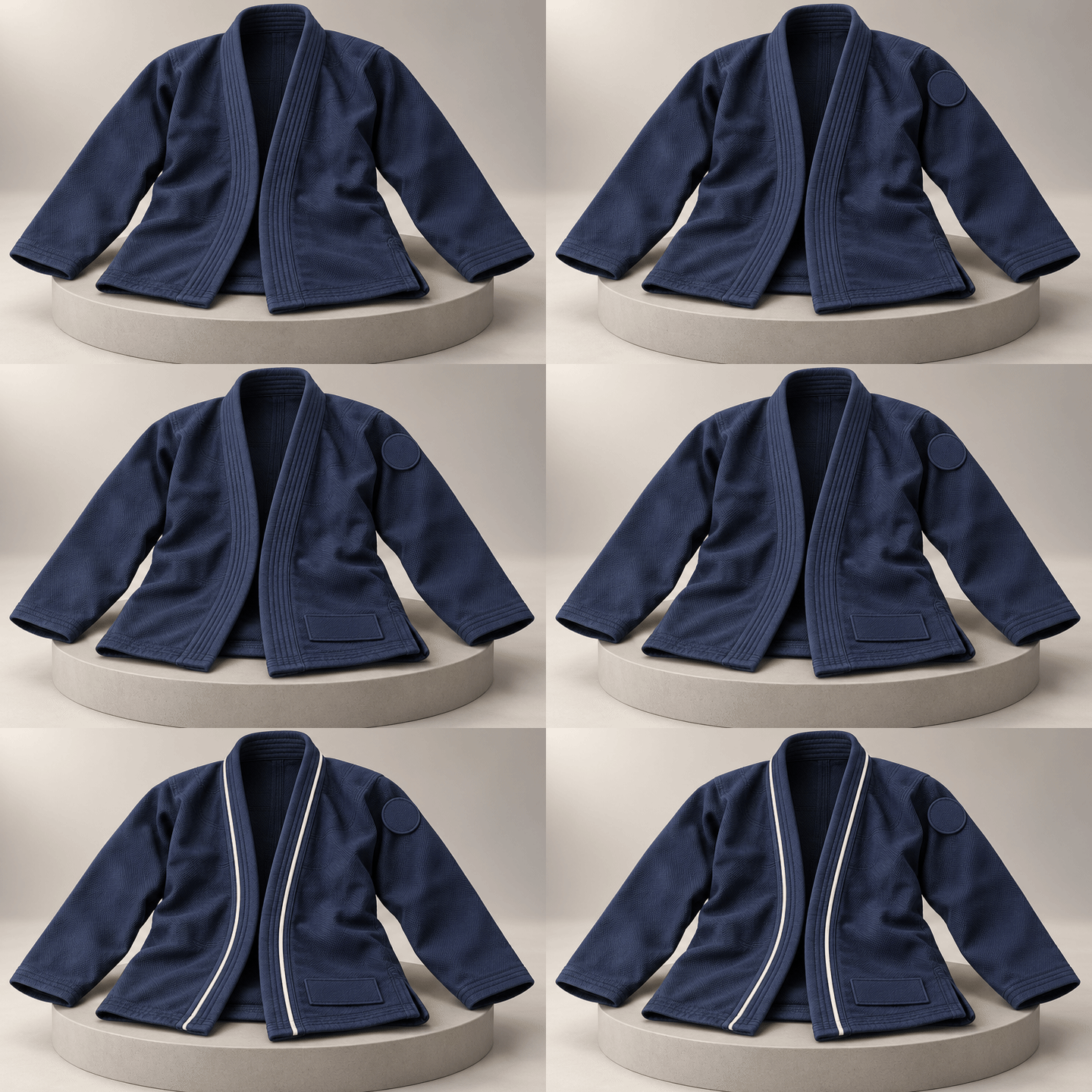
Several areas of a gi can be personalised. The collar and lapel are common places for contrast trim, as on a contrast trim academy gi, which gives the jacket a distinctive edge. These areas are gripped constantly in training, though, so heavy decoration there is usually avoided. The shoulders and back panel are popular spots for an academy logo or name, because they are large, flat and visible.
The sleeves and pants thigh are other areas where you can add personal elements. Patches or embroidery there change the look without getting in the way of grips on the collar. The inside of the jacket is also an option for a name or initials, where it stays discreet. When planning, think about how each decoration sits when the gi is worn, rolled in and washed.
Always check the current federation rulebook for where patches may go and how large they may be, since these rules change. Your academy may also have its own uniform policy, so ask your instructor before you finalise the design.
Embroidery vs sewn patches
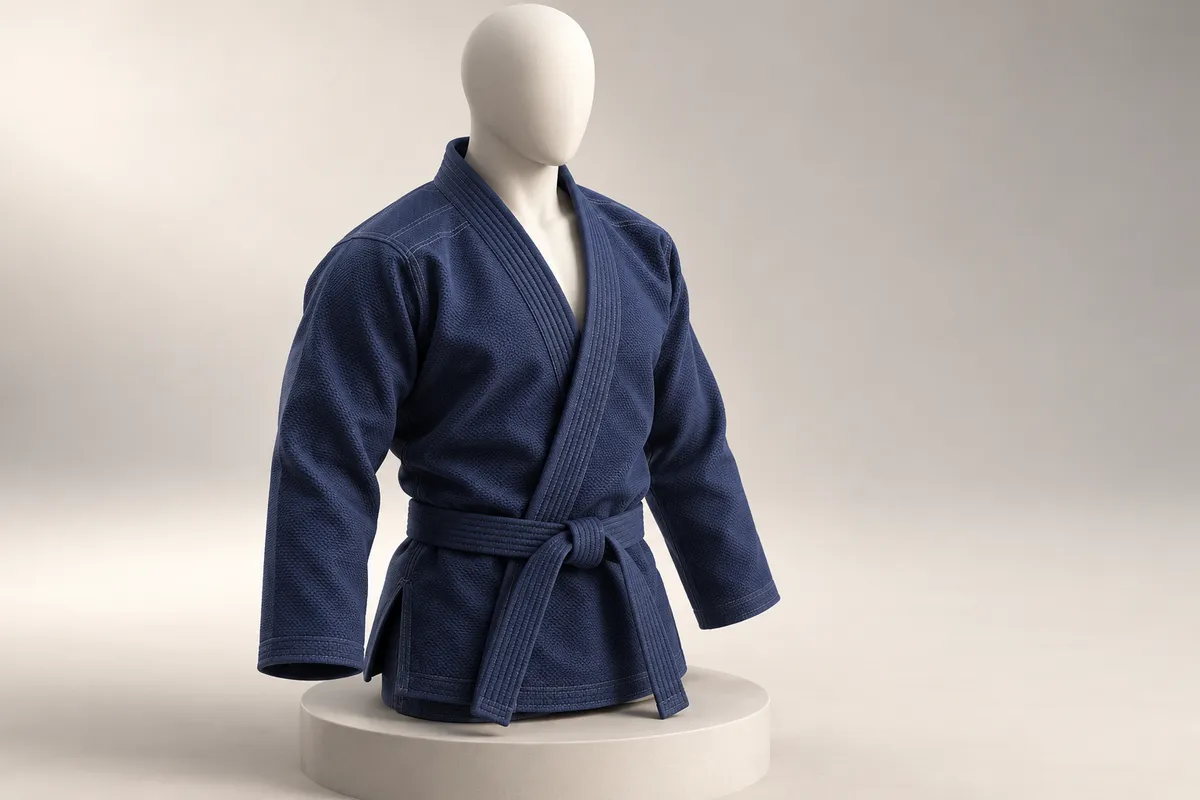
Embroidery and sewn patches are the two usual ways to personalise a gi, and each has trade-offs. Embroidery stitches the design directly into the fabric, giving a flat, permanent result that will not come loose. It suits detailed logos and names and gives a clean finish. Dense embroidery can add some stiffness, which matters in areas that are gripped often.
Sewn patches are fabric pieces stitched onto the gi. They can be replaced if damaged or if you want to change the design, which gives more flexibility. Patches also add some stiffness, so placement matters. The patch material and the stitching around its edge affect how it looks after many washes.
Both methods need an artwork file so the design is reproduced accurately, ideally a high-resolution or vector file. When caring for a personalised gi, follow the care label. Washing it inside out in cold water is the usual advice for protecting embroidery and patches.
Colour rules to check first
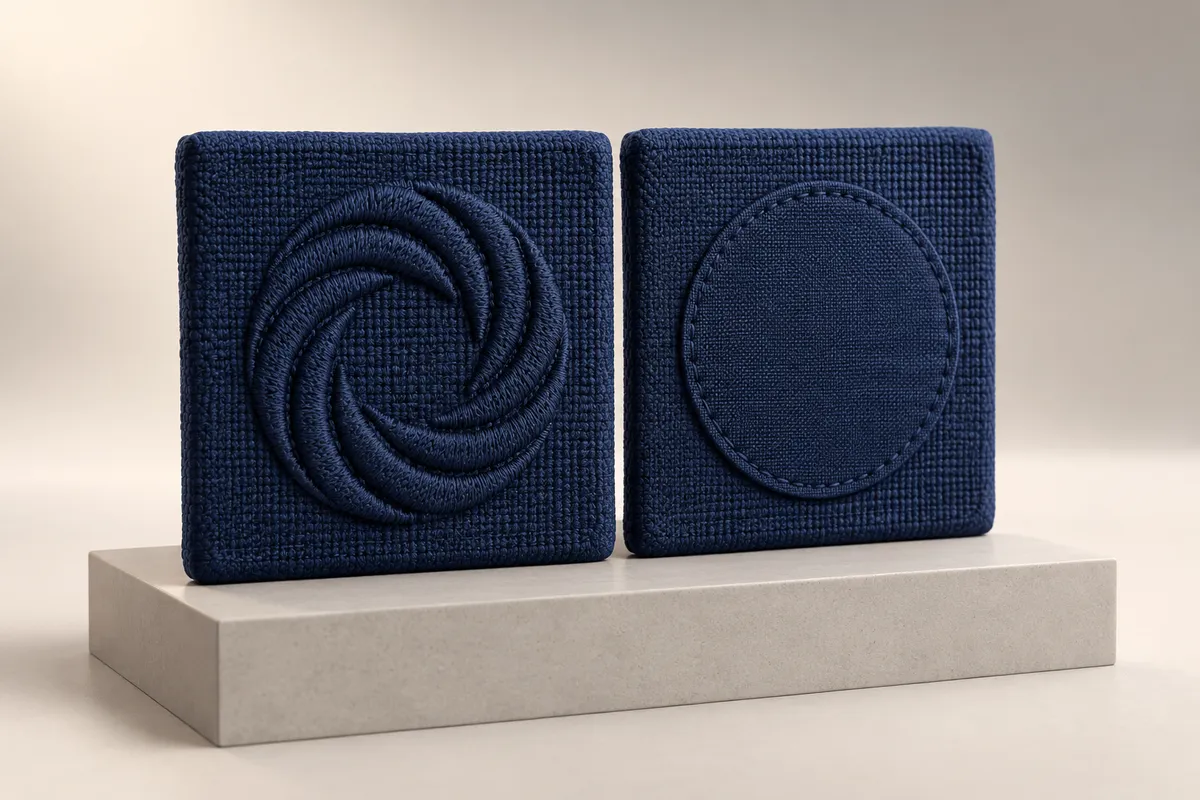
Before you choose colours, understand the rules set by your academy and by any federation whose events you enter. Academies often set a colour for classes or for a team look. Federation rules, such as the IBJJF rulebook, commonly allow white, blue and black gis for competition and also regulate where patches may be placed. Contrast trim colours may be restricted too.
The placement of patches and embroidery matters as much as colour. A design that ignores the placement rules can cause problems at check-in before a match. Ask your academy for any extra guidelines, because some prefer a minimal, uniform look for students.
Also think about how versatile your chosen colours are. A bold custom colour makes a statement but may not be accepted at every event or academy you visit. Always double-check the current rules and ask your academy before you commit to a colour.
Ordering for an academy or club
When ordering for an academy or club, the goal is usually one design across many sizes. That often means adult A labels, women's F labels and kids' M labels in the same order. Collect sizes from members using each brand's own size chart, because labels are not shared between brands. This step keeps the order consistent and avoids sizing problems later.
Sometimes a plain private-label base makes more sense than heavy customisation, especially for a new club. The Budget Custom Academy BJJ Gi is listed as a plain private-label base gi. The Custom Academy BJJ Gi with colour and logo options is listed as a custom gi with custom fabric options, and the Contrast Trim edition is listed as a custom gi with contrast trim. Confirm the details on each listing before you decide.
When placing a group order, communicate clearly with the supplier about what the academy needs. This includes the design, colours and any extras such as contrast trim. A detailed brief and written confirmation help avoid misunderstandings.
A pre-order checklist
Before placing your order, work through this checklist:
- Final artwork file: Provide a high-resolution or vector file of the design. Make sure the format suits the embroidery or patch shop.
- Placement proof approved in writing: Get a written proof showing where each logo or patch will sit. This avoids placement errors.
- Thread and patch colours: Specify the exact thread and patch colours. Colour codes or samples help with accuracy.
- Size run per member: Collect the size for each member using the brand's own chart. Keep the list in one shared document.
- Academy policy and current federation rules: Confirm the design and colours follow both. This prevents problems at training and at events.
- Care instructions: Pass the care label advice on to members. Cold washing and air drying help keep personalised details looking right.
| Personalisation | What it usually involves | What to check first |
|---|---|---|
| Colour and trim | Base gi colour plus contrast stitching or trim | Academy uniform policy and event colour rules |
| Embroidery | Logo or name stitched into the fabric | Placement zones and artwork file |
| Sewn patches | Fabric patches stitched in permitted areas | Patch material and placement rules |
| Name or initials | Small text on sleeve, pants or inner jacket | Whether the academy wants a uniform look |
Frequently Asked Questions
Where can I buy a jiu jitsu gi in person?
You can often buy a jiu jitsu gi in person at local academies, martial arts shops and some open mats. Many academies sell gis or lend them to new students, which helps with trying on for fit. Some martial arts shops also carry gis you can try before you buy. If nothing is available locally, order online using each brand's own size chart, and read how to pick a first gi before you choose.
Should I choose embroidery or a patch?
Choose embroidery for a flat, permanent logo that will not come off with regular use. Patches are a good choice if you expect to change the design or move to a different gym, because they can be removed and replaced. Both need to follow the placement rules of the events you enter. Check the current rulebook and ask your academy before you decide.
What should I give the embroidery or patch shop?
Give the shop a high-resolution or vector artwork file of your design. Specify the exact placement, the colours and the size of the design. Also list the number of gis and the size of each one. Finally, ask for a written proof of the placement so you can check everything before the work starts.
Can I personalise a gi I already own?
Yes, you can usually personalise a gi you already own. A local embroidery or tailoring shop can stitch a name or sew patches onto it. Make sure the fabric is clean and has been washed a few times before adding any decoration. Keep the personalisation off the collar and lapel, where it would get in the way of grips. Always check your academy policy and the current federation rulebook for patch placement, and ask the shop for a placement proof first.
Conclusion
A personalized jiu jitsu gi starts with the rules, not the artwork: check your academy's policy and the current federation rulebook first. Then decide which parts to customise and whether embroidery or patches suit each one. For a club order, collect sizes from each brand's own chart and agree everything in writing. If you are comparing bases, the Custom Academy BJJ Gi with colour and logo options listing is one place to read what a custom gi offers. Clear communication with the supplier is the single step that prevents most problems.


