


A women's jiu jitsu gi is cut with a shorter, narrower jacket, more room through the hips and pants that sit differently at the waist. Choose it over a small men's size when the sleeves or jacket length swamp you, size from the brand's F chart, and pick a weave weight for how often you train. This guide covers the cut, F sizes, weave weight, pants and academy rules in that order. The women's BJJ gis range is a useful reference while you read, because every point below is something you can check on a listing.
Key Takeaways
- Women's cut: A women's jiu jitsu gi is usually cut with a shorter, more fitted jacket and narrower shoulders to suit a typical female frame.
- When unisex fits better: A unisex or small men's gi may fit better if you are taller or broader in the shoulders, so compare both charts.
- F labels: Women's sizes are usually labelled F1 to F5, and they do not convert one-to-one with adult A labels between brands.
- Weave weight: GSM describes the fabric's weight; lighter fabric generally feels softer and dries faster, while heavier fabric feels thicker at the collar.
- Pants and drawstring: The pants should sit comfortably at the hips, and a drawstring tied in a bow with tucked loops stays put in training.
- Academy rules: Check with your academy about gi colour, patches and any other requirements before you order your first or next gi.
Table of Contents
- Do you need a women's gi?
- Women's cut vs unisex: the real differences
- How F size labels work
- Choosing a weave weight for how you train
- Pants fit, waist and drawstring
- Colour and academy rules
- A quick buying checklist
- Frequently Asked Questions
Do you need a women's gi?
A women's jiu jitsu gi is designed with a typical female frame in mind, offering a more tailored fit. Unlike unisex gis, which are often cut for a more general, typically male body type, women's gis are shorter in the torso, narrower in the shoulders and roomier through the hips and thighs. This design can give a better fit and more comfort through a full session of drilling and rolling.
The decision still depends on your build and preference. If you are taller or have broader shoulders, a small men's or unisex gi might fit you better. If a men's gi's sleeves or jacket length are too long, a women's gi is likely the better choice, and the wider guide to choosing a first BJJ gi covers the basics that apply to every cut.
Under the gi, it is common to wear a rash guard or sports top to absorb sweat and prevent skin irritation. Check with your academy for any requirements or norms it has about what is worn underneath. Being comfortable and following the academy's guidelines makes the first weeks of training easier.
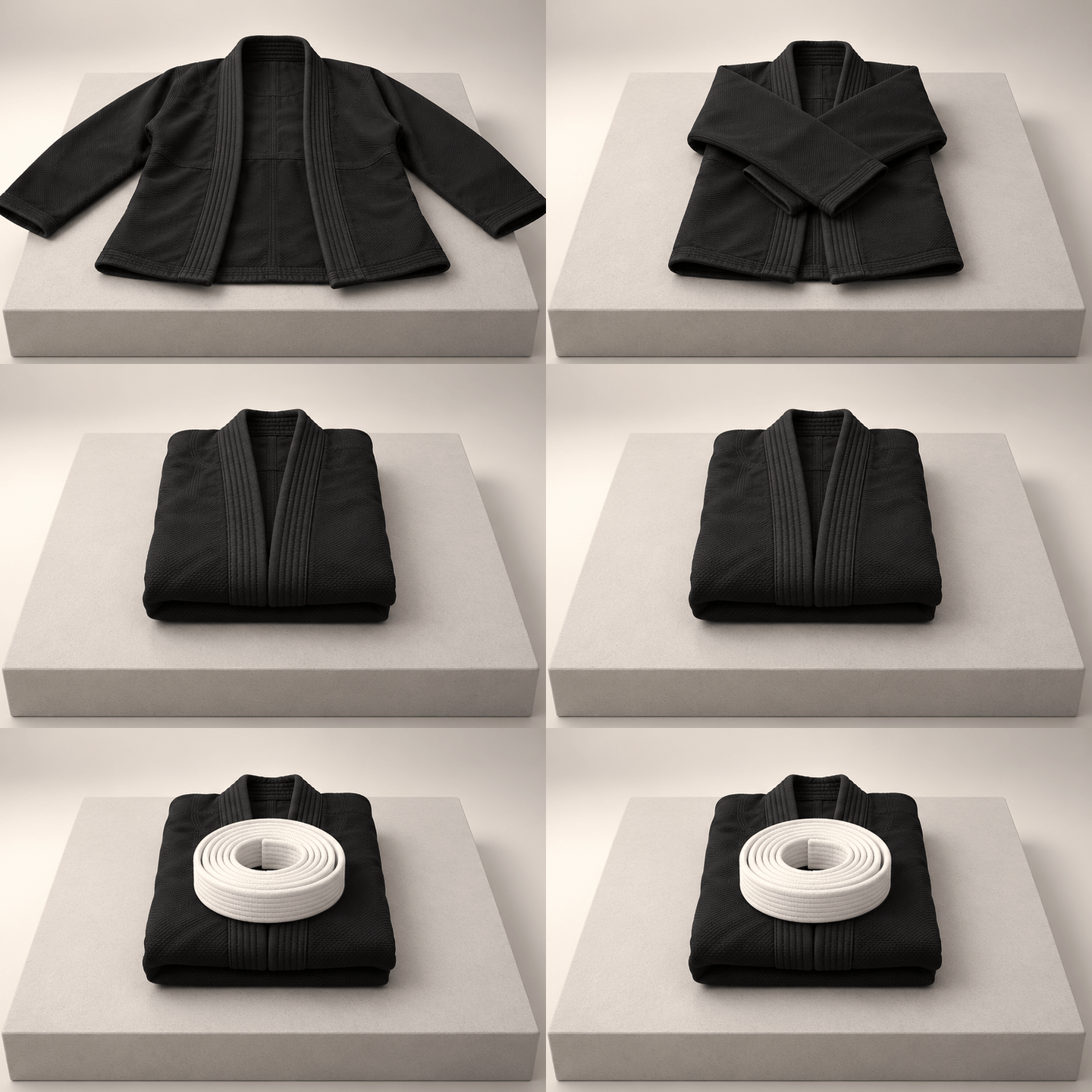
Women's cut vs unisex: the real differences
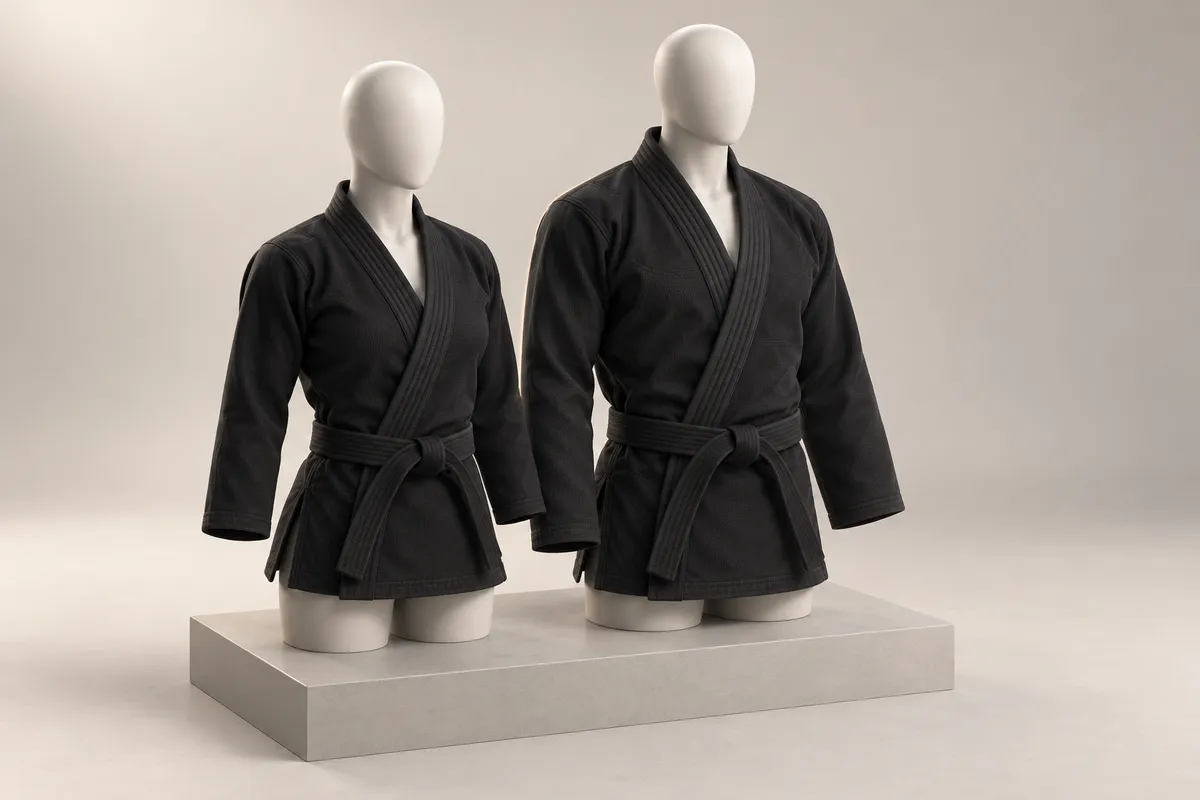
The main differences between women's and unisex gis lie in the cut. Women's gis are generally shorter in the torso, narrower in the shoulders and roomier in the hips and thighs. This addresses common problems such as sleeves that are too long or jackets that are too wide; extra sleeve gives training partners easy grips, and a wide jacket bunches up under the belt.
The pants may also have a different waistband design, usually with an adjustable drawstring. When trying on a gi, pay attention to the lapel and sleeve cuffs. A well-fitted lapel lies flat and crosses without gaping, while the sleeve cuffs should sit near the wrist when your arms are stretched forward.
The skirt of the jacket (the part below the belt) should cover your hips so it stays in place during training. A gi that fits well lets you focus on the technique rather than on adjusting the jacket between rounds.
How F size labels work
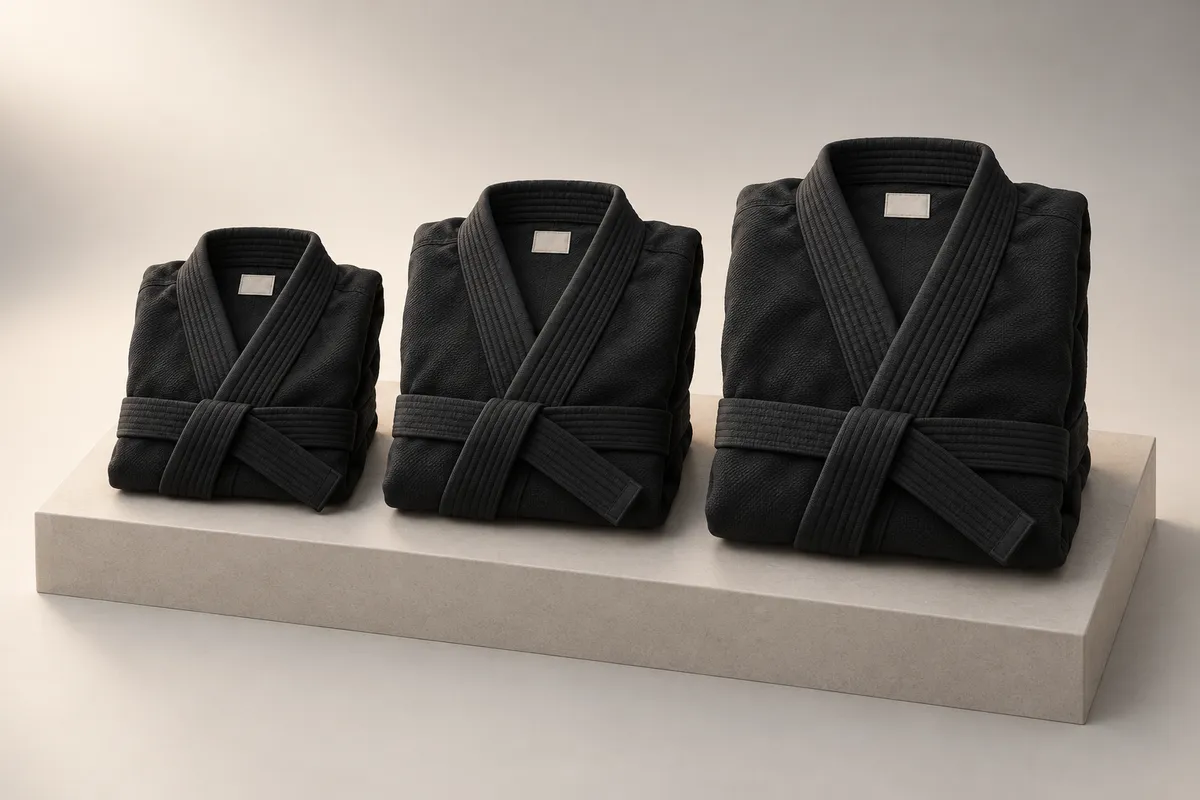
F size labels are used for women's gis. Labels such as F1 to F5 are not directly comparable to adult sizes, which are typically labelled A0 to A5. Each brand has its own chart, so take your own measuring for a gi notes (charts usually ask for height and weight, and sometimes chest) and compare them against each brand's chart.
If you are between sizes, compare both sizes on the chart and, where you can, try both. Taking the time to find the right size is worth it, because the label alone tells you little. When trying on a gi, stretch your arms forward to check the sleeves are not too long and that the jacket does not bunch under the belt.
Choosing a weave weight for how you train
Heavier GSM generally means a thicker jacket and collar that dries more slowly, while lighter GSM dries faster and packs smaller. The Women's Essential BJJ Gi is listed as a 350 GSM weave with a women-specific tapered cut, and the Women's Everyday BJJ Gi is listed as a 450 GSM pearl weave jacket with a rashguard liner and 10 oz ripstop pants. Read each listing for the details.
When choosing a weave weight, consider your climate and how often you train. If you train in a warm gym, a lighter gi can feel cooler. A lighter gi also dries faster between sessions, which helps if you train often. The Women's Ultralight BJJ Gi is listed as a 275 GSM jacket with 10 oz ripstop pants, which places it at the lighter end of the range.
Cotton can shrink in hot water or a dryer as general fabric behaviour, so follow the care label. Washing cold and air drying is the usual advice for keeping a gi's fit.
Pants fit, waist and drawstring
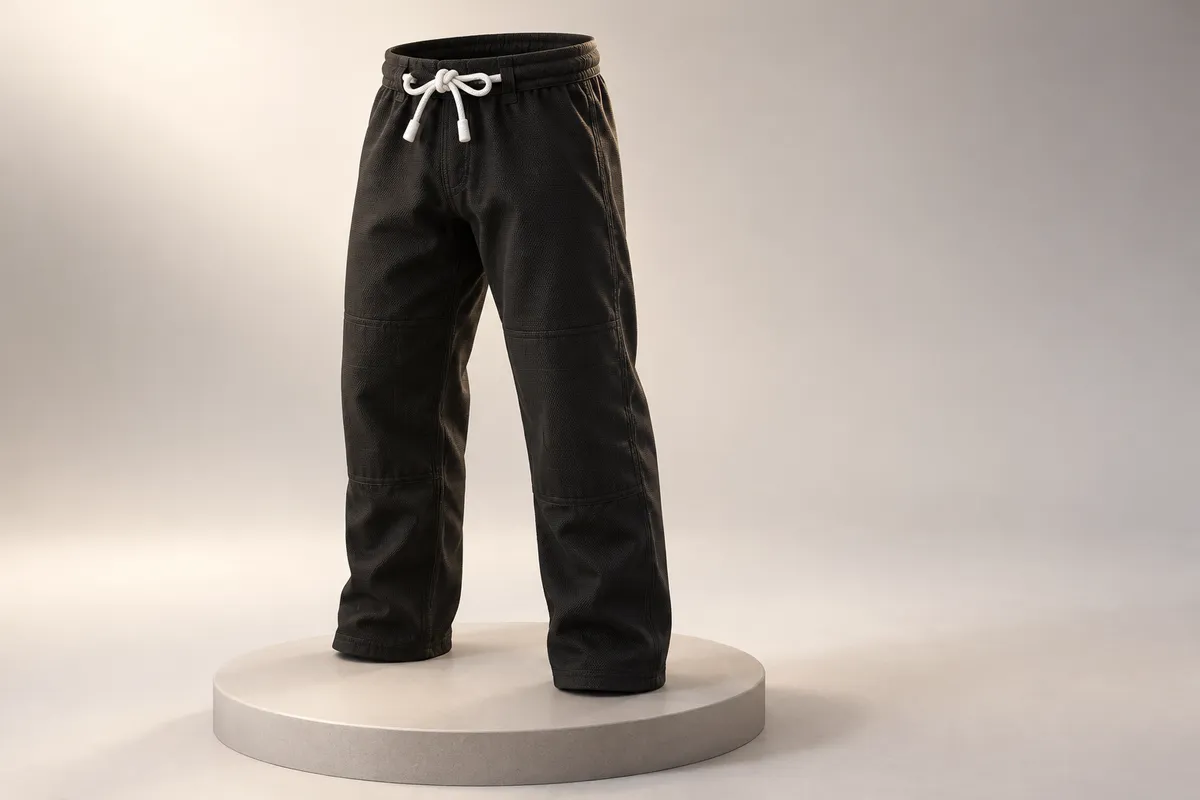
Women's gi pants usually use an adjustable drawstring. The pants should be long enough to reach near your ankles but not drag on the mat, where a loose hem can catch your toes. The drawstring should keep the pants in place during training, so they do not slip down when you are inverted or scrambling.
When tying the drawstring, tie it in a bow and tuck the loops in so they do not get caught during training. Ripstop pants are, in general, a lighter pant fabric than the cotton used for jackets. If the pants wear out before the jacket, replacement gi pants are sold separately, so you can keep a jacket that still fits.
Colour and academy rules
Check with your academy for any colour or patch requirements. Some ask for a white gi, while others also allow blue or black. Federation rules, such as the IBJJF rulebook, commonly allow white, blue and black for competition. Always check the current rules before an event.
Ask as well whether the academy has loaner gis for new students and whether women's classes have their own norms. If you plan to add patches, ask where they may go before you sew anything on.
Before a competition, review the current rulebook to make sure your gi meets its requirements. This saves last-minute problems at check-in.
A quick buying checklist
- Body type: Decide between a women's gi and a unisex gi based on your build. Consider your height and shoulder width.
- Size chart: Use the brand's F size chart. Compare your measurements with it, and compare both sizes if you are between them.
- Weave weight: Match the GSM to how often you train and your gym's climate. Lighter fabric dries faster; heavier fabric feels thicker.
- Pants fit: Check the waist, hips, thighs and length. The pants should reach near your ankles without dragging, and the drawstring should tie securely.
- Academy rules: Confirm colour and patch requirements with your academy, and check the current rulebook before a competition.
- Under the gi: A rash guard or sports top helps with comfort and hygiene during training.
| Option | Who it tends to suit | What to check |
|---|---|---|
| Women's-cut gi (F sizes) | Most women who find men's sleeves or jacket too long | The brand's F chart; jacket and sleeve length |
| Small men's or unisex gi (A0, A1) | Taller or broader-shouldered women | Sleeve length and hip room |
| Lightweight women's gi | Frequent training, warm gyms, travel | Listed GSM and pant fabric on the listing |
| Heavier women's gi | Those who prefer a thicker collar and jacket | Listed GSM and drying time |
Frequently Asked Questions
What is the best feeling women's BJJ gi?
The best feeling women's BJJ gi is one that fits your frame, with sleeves near the wrist, a jacket that does not bunch under the belt, and pants that are comfortable at the hips. The feel also depends on the weave and GSM: lighter gis feel softer and dry faster, while heavier gis feel thicker at the collar. Try one on or compare listings side by side to find what suits you.
Should I buy a women's BJJ gi or a unisex gi?
Buy a women's BJJ gi if men's sleeves and jackets swamp you, since the cut is shorter and narrower. If you are taller or broader in the shoulders, a unisex or small men's gi might fit better. Compare each brand's F and A size charts against your own measurements before you order, and ask a training partner what has worked for them.
How do I choose my gi for jiu jitsu?
Start by asking your academy about colour and patch requirements. Then measure yourself and read the brand's size chart. Choose a weave weight based on how often you train and your gym's climate. Finally, check what the listing says about the pants, such as the fabric and how the waist closes, so the whole set suits you.
What if I am between BJJ gi sizes?
If you are between sizes, compare both sizes on the brand's own chart. Cotton can shrink in hot water or a dryer, so many people choose the larger size and wash it cold. A very baggy gi can give your partners easy grips, though. Ask a training partner or coach for their opinion before you decide.
Conclusion
The right women's jiu jitsu gi is the cut and size that fits your frame. Use each brand's F chart to find your size, and compare it with a small men's size if you are tall or broad-shouldered. Choose a weave weight that suits how often you train and how warm your gym is. Check your academy's rules on colour and patches before you order. Then wash it cold and follow the care label so the fit stays the way you bought it.


