


The best jiu jitsu gi for beginners is a plain, mid-weight cotton gi in a colour your academy allows, sized from the brand's own chart rather than your T-shirt size. Prioritise fit, reinforced knees and simple care over brand or price, and check with your coach before ordering patches or colours. This guide ranks what to check rather than naming a winner, so you can compare any listing, including the beginner and first BJJ gis range, with the same questions.
Key Takeaways
- Fit before brand: A jiu jitsu gi for beginners should fit your frame and your academy's rules before the brand name or the price matters at all.
- Size labels: A0 to A5 labels are not shared between brands, so read each brand's own chart instead of trusting a letter you wore before.
- Weave and weight: Single weave is simpler and often lighter, pearl weave is a common textured mid-weight weave, and GSM describes the fabric's weight.
- Colour rules: Many academies ask beginners to train in white, and federation rules commonly allow white, blue and black, so check both before buying.
- Pants wear first: The knees and drawstring of gi pants usually take the most wear, and replacement pants let you keep a jacket that still fits.
- Starter sets: Some starter listings put a white belt in the title, so read the listing to see exactly what the set includes before you order.
Table of Contents
- What makes a gi good for a beginner
- Fit first: how gi size labels work
- Weave and weight in plain language
- Colour and academy rules to check before you buy
- Pants, knees and the drawstring
- Starter sets with a belt: what to expect
- A 5-point checklist for your first gi
- Frequently Asked Questions
What makes a gi good for a beginner
Choosing the right gi as a beginner comes down to practicality and how it holds up to regular training. A good beginner gi is usually made of mid-weight cotton, which balances comfort with substance. A well-fitted gi allows a full range of motion without being too restrictive or too loose. This matters for drilling techniques and for a comfortable first few months on the mat.
When examining the gi, pay attention to key areas such as the lapel, collar, skirt and sleeve cuffs. The lapel should be thick enough to handle repeated gripping, which is a constant part of BJJ. The collar should be sturdy but not overly stiff, as a stiff collar can be uncomfortable against the neck. The skirt (the part of the jacket below the belt) should be long enough to cover your hips and allow movement; if it is too short, it rides up during training. The sleeve cuffs should sit near the wrist and stay in place during grappling without restricting your arms.
Fit first: how gi size labels work
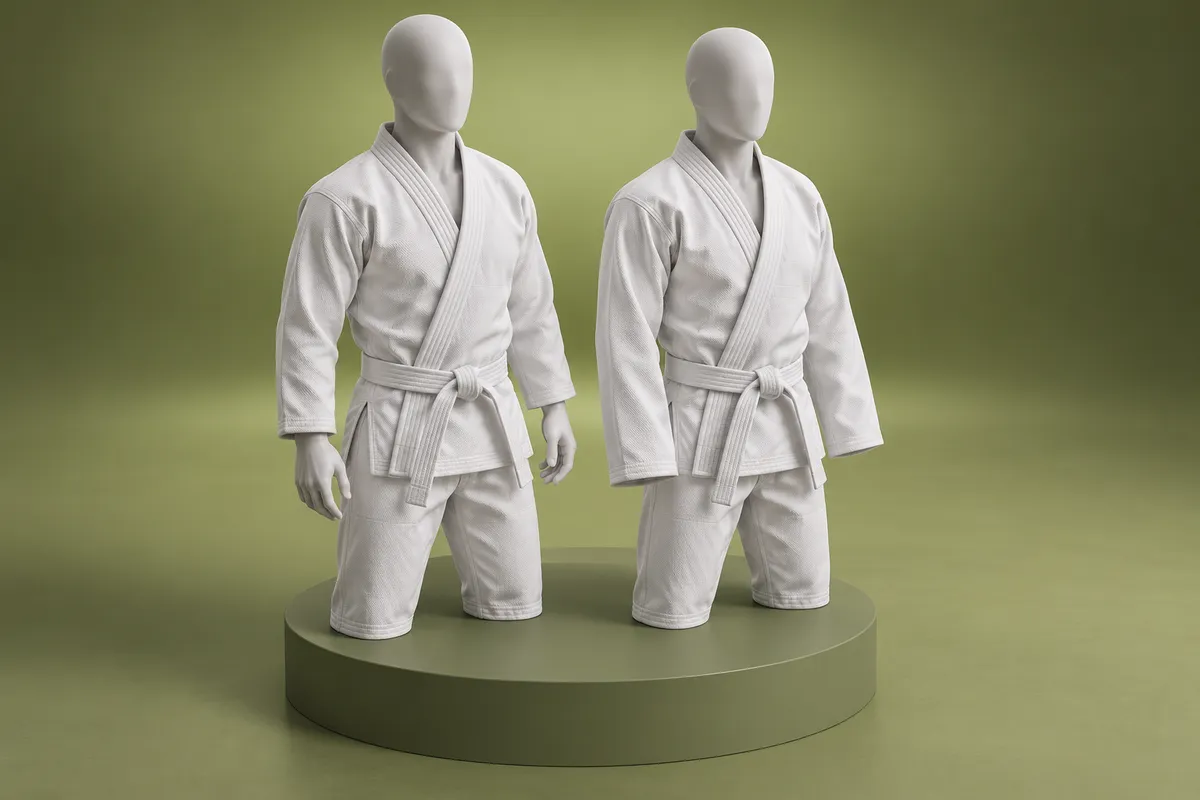
Gi size labels can be confusing, especially for beginners. Most brands use a system of A0 to A5 labels, but these labels can vary significantly between brands. An A2 from one brand might fit differently from an A2 from another brand, so use the brand's specific size chart. Women's F labels and kids' M labels are separate size paths, so check the chart that matches who will wear the gi.
When trying on a gi, the jacket should be loose enough to grab but not flap excessively. The sleeves should end near the wrist, and the pants should be comfortable at the waist and knees, with room to move freely but not so loose that they get in the way. If you are unsure about the fit, read how to measure for a gi and ask your coach or a more experienced training partner. Common mistakes include buying a gi based on T-shirt size or choosing a competition-cut gi that is too tight, which restricts movement and hinders your training.
Weave and weight in plain language
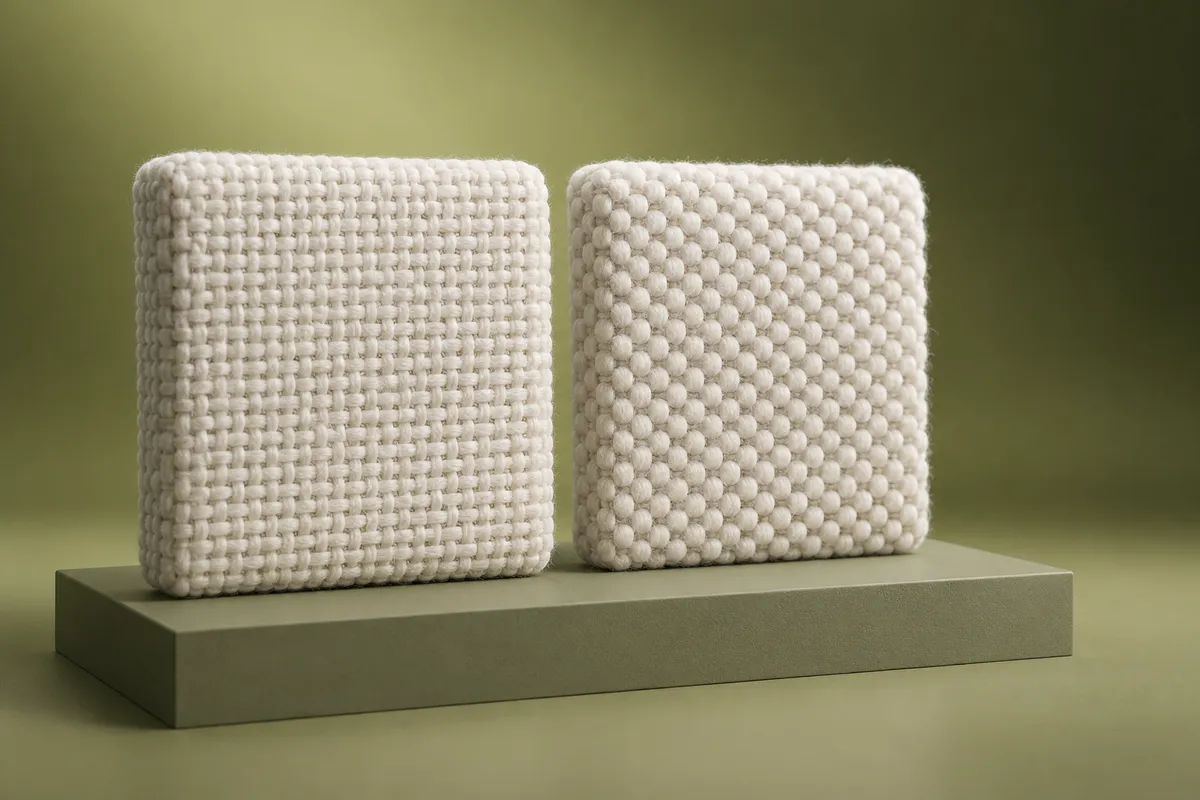
The two most common weaves are single weave and pearl weave. Single weave is a simpler, often lighter weave, while pearl weave has a textured, bead-like pattern and is a common mid-weight weave. The weight of the fabric is given in grams per square metre (GSM). Heavier GSM generally means a thicker, warmer and slower-drying fabric, while lighter GSM generally means a faster-drying fabric. If you train in a hot climate, a lighter weave might be more comfortable, and our BJJ gi guide covers the other weave names you will see.
Single weave gis are often more affordable and lighter, which suits someone who is just starting and wants a gi that is easy to manage. Pearl weave gis have a firmer, textured surface that many people like as they progress. Ultimately, the choice between single weave and pearl weave depends on your needs and preferences, so it is worth trying on both if your academy has spares.
Colour and academy rules to check before you buy
Many academies ask beginners to wear white gis, so check with your coach about colour, patches and emblems before you order. Federation uniform rules, such as the IBJJF rulebook, commonly allow white, blue and black gis for competition. Always verify the current rulebook and your academy's own requirements. Some academies have their own colour preferences or restrictions, and you may be asked to change before class if your gi does not comply.
Whatever the colour, care decides how long a gi stays pleasant to wear. Cold washing and hang drying are the usual advice for cotton, because hot washing a new cotton gi can make it shrink. Avoid fabric softener, which can leave residue in the weave. If you are unsure, follow the garment's care label and the product listing.
Pants, knees and the drawstring
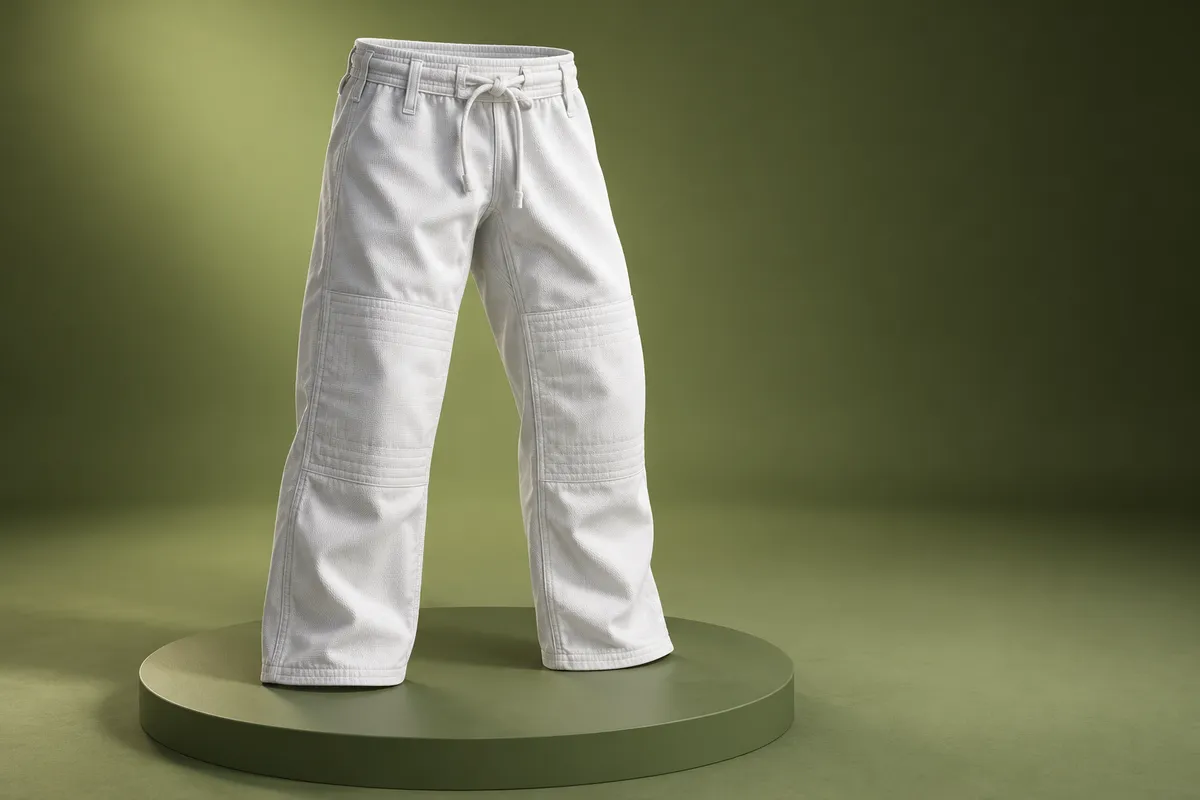
The pants are often the first part of a gi to show wear, especially around the knees. Look for reinforced knees, which add a second layer where the fabric meets the mat. The drawstring keeps the pants in place during training, so make sure it is secure and adjustable. A loose or broken drawstring lets the pants slip during grappling, which is distracting for you and your partner.
If your pants wear out faster than the jacket, consider replacement gi pants. This lets you keep using a jacket that fits well while replacing only the worn pair. When comparing pants, check the listing for the material and how the waist closes. If you are unsure about the construction, the product listing is the place to read the details.
Starter sets with a belt: what to expect
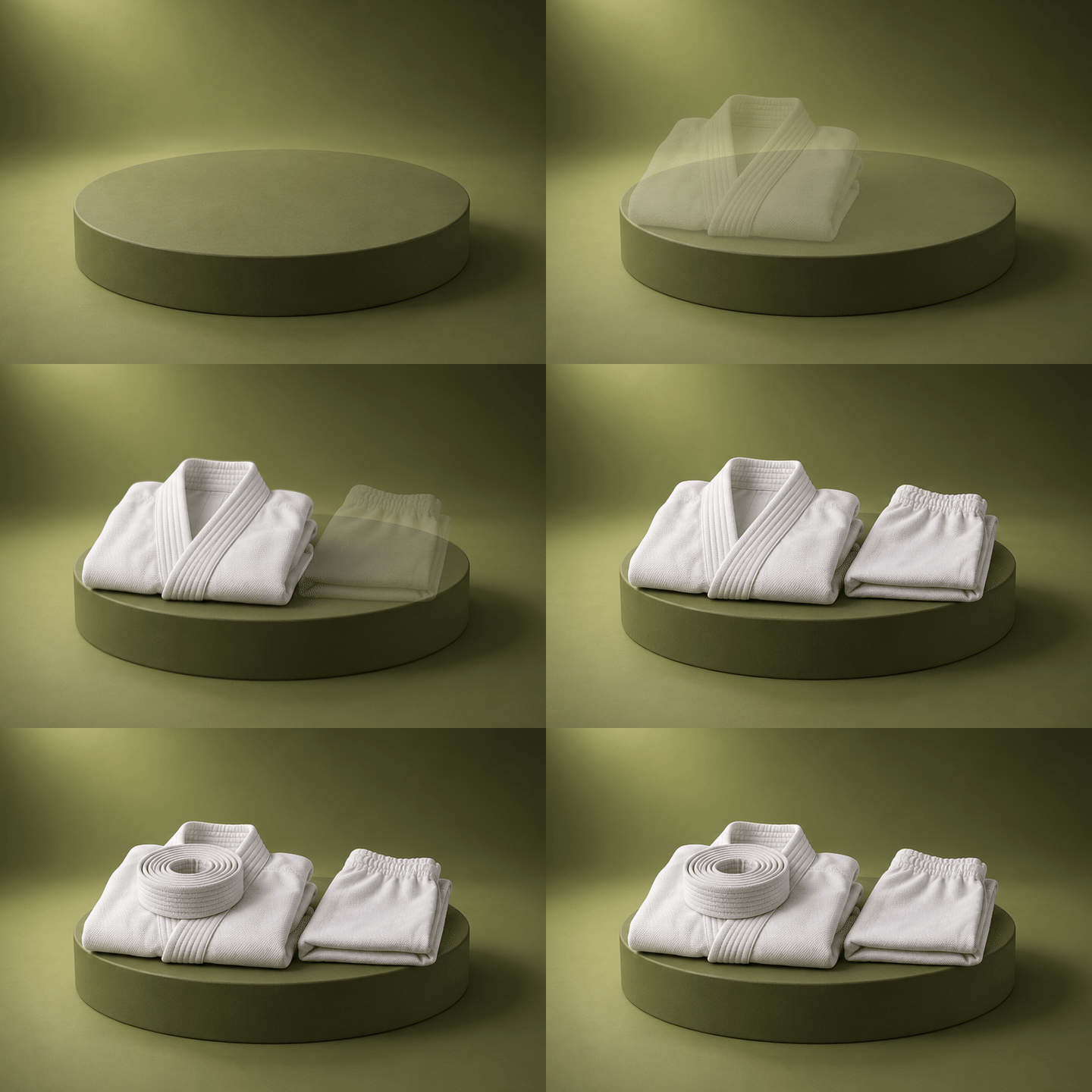
A starter set with a belt is convenient, but check the listing and your academy's policies first. Some starter listings include a white belt in the title; read the listing to see what is included. Brazilianjiujitsugi's beginner range includes the First BJJ Gi Starter Set, listed as a cotton blend with a white belt in the title, the Beginner Essential BJJ Gi, listed as 380 GSM 100% cotton weave, and the Daily Training BJJ Gi, listed as a 400 GSM pearl weave jacket with 10 oz cotton pants. Before purchasing, ask your academy if it provides loaner gis, especially if you are just starting out.
Starter sets are meant to give you what you need for a first class, but it is important to verify what each set includes. Some sets may add accessories, while others are more basic. If you are unsure, read the product listing carefully or contact the seller. Also ask your academy whether it has its own gi or a preferred colour, so your first purchase is one you can keep wearing.
A 5-point checklist for your first gi
- Fit: Use the brand's own size chart. A well-fitted gi is loose enough to grab but does not flap, the sleeves end near the wrist, and the pants are comfortable at the waist and knees.
- Weave and weight: Choose a mid-weight cotton gi for a balance of comfort and how it holds up to regular training. Single weave is often lighter, while pearl weave has more texture.
- Colour and patches: Verify your academy's requirements for colour and patches. Many academies ask for white, and federation rules for competition are in the current rulebook.
- Pants and knees: Look for reinforced knees and a secure, adjustable drawstring. If the pants wear out before the jacket, replacement pants keep the set going.
- Care: Follow the care label. Cold washing and hang drying are the usual advice for cotton, and skipping fabric softener keeps the weave clean.
| What to check | Why it matters for a first gi | Where to check it |
|---|---|---|
| Size label (A0 to A5) | Labels are brand-specific; the same letter can fit differently | The brand's size chart and a measuring guide |
| Weave and GSM | Heavier weaves feel stiffer and warmer; lighter ones dry faster (general guidance) | The product listing's material line |
| Colour | Some academies ask beginners to train in white or blue | Your academy |
| Pants | Knees and the drawstring take the most wear in general | The listing and the care guide |
| Belt included | Some starter listings include a white belt in the title | The listing title |
Frequently Asked Questions
What color gi should a BJJ beginner buy?
A white gi is the safest first choice for a BJJ beginner. Many academies require or prefer white gis for new students, and federation rules like the IBJJF rulebook commonly allow white, blue and black for competition. Check your academy's specific rules and the current federation guidelines before you buy. To be sure, ask your instructor which colours are accepted in beginner classes.
Should a beginner start with gi or no-gi BJJ?
It depends on what the academy teaches and its timetable. Gi classes focus on techniques involving grips on the lapel, collar and sleeve, while no-gi uses a rash guard and shorts. Many people train both to develop a well-rounded skill set. To decide, ask the academy which beginner class to join and match it to your own goals.
Is it better to have a BJJ gi too big or too small?
It is better for a BJJ gi to be slightly big rather than too small. Cotton can shrink in a hot wash or dryer, which is general fabric behaviour. A too-small gi restricts movement and exposes the wrists and ankles, making it difficult to train. However, very baggy sleeves give your partners easy grips, so aim for a balanced fit.
How should a BJJ gi fit?
A BJJ gi should fit so that the jacket skirt covers the hips, the sleeves end near the wrist with arms forward, the lapels cross without gaping, and the pants end near the ankle with the drawstring holding them securely. Check the brand's own size chart for the most accurate fit, as different brands vary.
How do I care for my new BJJ gi?
Wash your BJJ gi after every training session using cold or cool water. Hang it to dry in a well-ventilated area, out of direct sunlight. Avoid the dryer unless the care label allows it, and never leave the gi damp in a bag, as this can lead to odours and mould.
Conclusion
The best jiu jitsu gi for beginners is the one that fits well, meets your academy's rules and is easy to care for. Check the brand's size chart and your academy's colour requirements before anything else. A mid-weight cotton gi with reinforced knees and a proper fit will serve you well through your first months of training. Always check with your academy for its specific requirements and policies.


