


For your first BJJ class, wear comfortable athletic clothes with no zips, pockets or buttons, and ask the academy whether the class is gi or no-gi and whether they lend a gi to new students. Bring water, sandals and a towel, and buy your own gi once you plan to keep training. The first session is a chance to get a feel for the academy and the training, so comfort and good manners matter more than kit. This guide covers what to wear, what to bring, borrowing a gi, and how to buy and size your own when you are ready.
Key Takeaways
- Ask first: Before a first BJJ class, ask the academy whether the session is gi or no-gi and whether loaner gis are available.
- No-gi clothing: For no-gi, wear fitted athletic clothes with no zips, pockets or buttons that could catch fingers or toes.
- Prepare yourself: Remove jewellery and trim your nails before class, which protects your partners and follows most academy rules.
- Loaner gis: Many academies lend gis to new students, so ask about sizes in advance and follow their washing or return instructions.
- Your bag: Bring a water bottle, flip-flops and a towel, plus a spare T-shirt and a bag for sweaty kit.
- Buying later: A borrowed gi helps you decide whether to buy your own once you know you will keep training.
Table of Contents
- Gi class or no-gi class: ask first
- What to wear if you have no gi
- Borrowing a gi for a trial class
- What to bring in your bag
- When to buy your own gi
- Sizing a first gi you have not tried on
- Frequently Asked Questions
Gi class or no-gi class: ask first
Before you go, find out whether the session is a gi class or a no-gi class. Gi classes use the traditional jacket, pants and belt, while no-gi classes use fitted athletic wear such as a rash guard and shorts. Many academies run both types of class on different days, so check the timetable or message the academy to confirm. Some trial classes are no-gi only, so knowing this in advance helps you prepare.
Knowing the difference also helps you see which style you enjoy. In gi training, the jacket and pants give you and your partner plenty of fabric to hold. In no-gi training there is less to grip, so the clothing is close-fitting. Both styles have their place, and many people train both.
If you are unsure, ask the academy before your visit. Staff are used to the question and can tell you exactly what to wear, and browsing first BJJ gis shows what a gi set looks like before you ever put one on.
What to wear if you have no gi
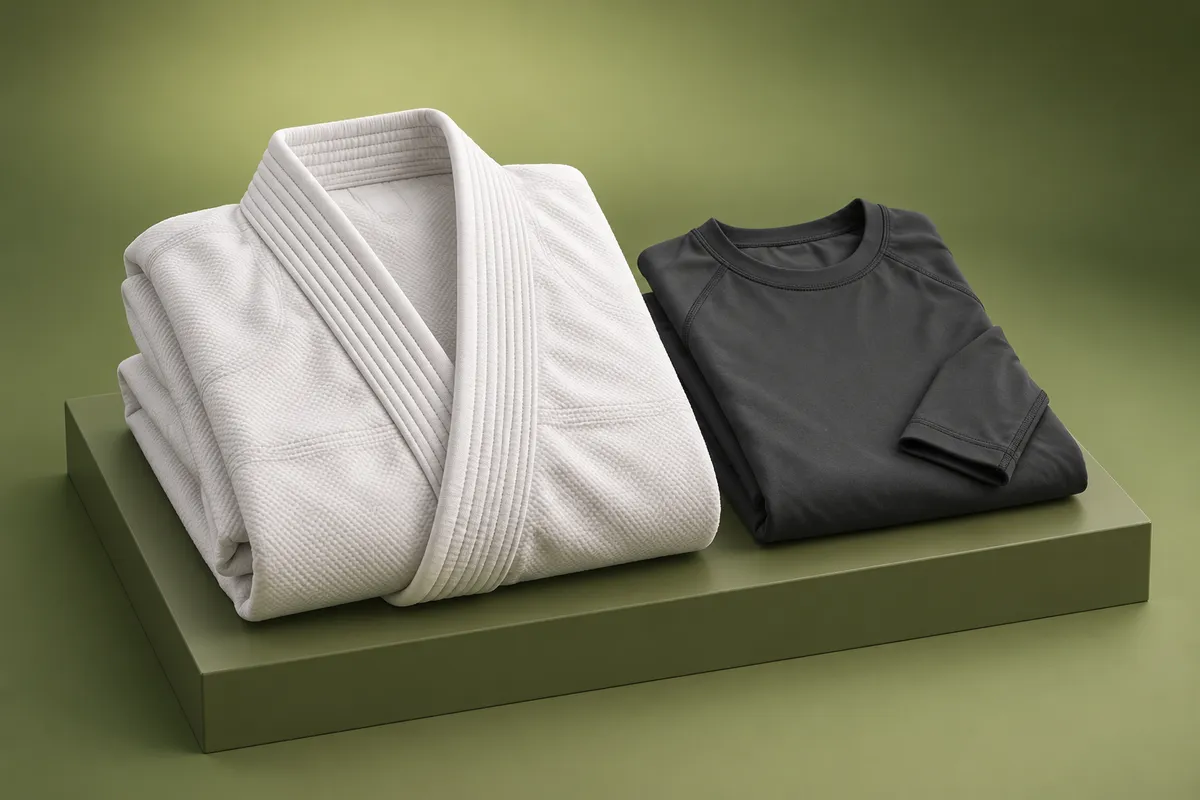
If you are attending a no-gi class or do not have a gi yet, choose fitted athletic clothes. A fitted T-shirt or rash guard with athletic shorts or leggings without pockets or zips works well. These clothes let you move freely and are less likely to catch or tangle during training. Avoid loose clothing such as baggy T-shirts or sweatpants, which get in the way.
Before you go, remove any jewellery, such as necklaces, bracelets or earrings. Trim your nails short and smooth so you do not scratch your training partners. Many academies have rules about footwear off the mats, so check whether to bring flip-flops. Following these rules keeps the space safe and welcoming for everyone.
Your clothes should be clean. Turning up in fresh kit shows respect for the academy and your partners, and it sets a good tone for your first session.
Borrowing a gi for a trial class
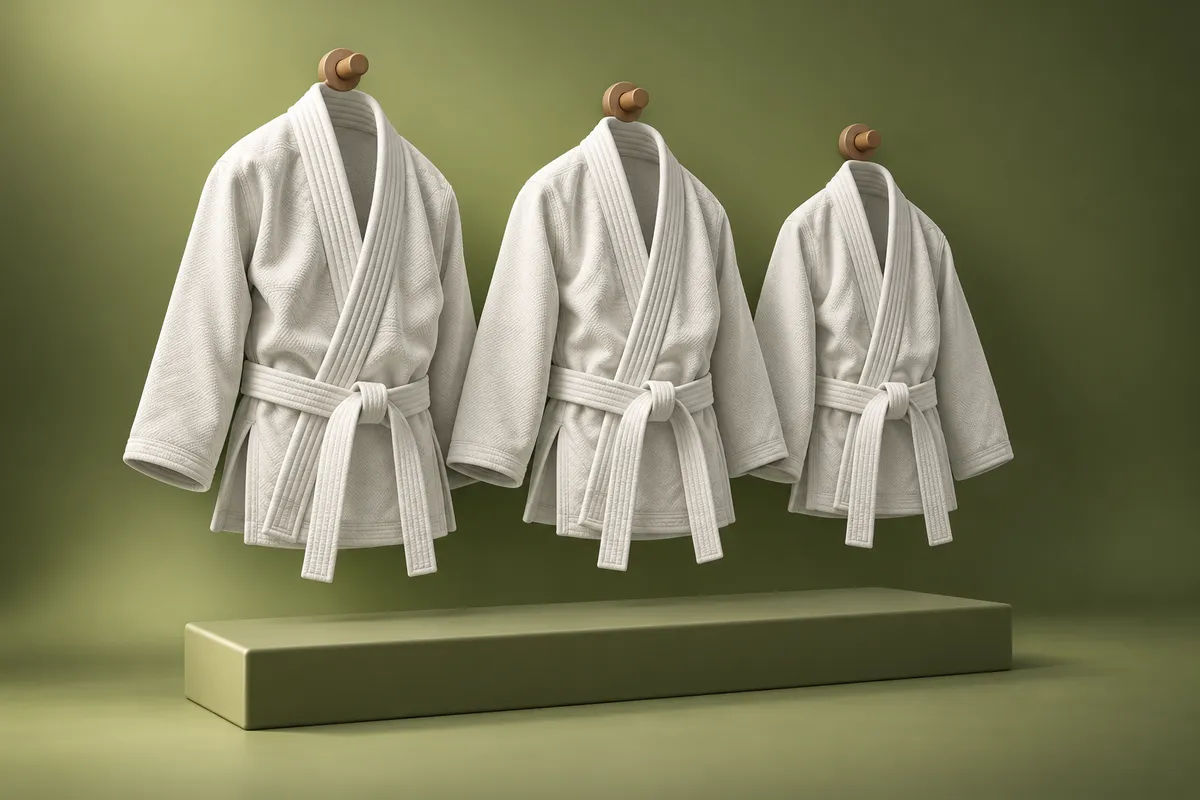
Many academies keep loaner gis for new students, so you can try a gi class without buying your own kit straight away. If you plan to attend a gi class, ask the academy whether a loaner is available. Check the sizes in advance; a loaner may not fit perfectly, but it still gives you a feel for the jacket and pants.
When you borrow a gi, follow the academy's instructions for returning or washing it. Some academies ask you to wash it before returning it, while others prefer it handed back as it is. Respecting these instructions keeps the loaner system working for the next new student.
A borrowed gi is useful for your first class. It lets you feel how a gi moves and how the jacket and pants sit, which helps you decide whether to buy your own, and the guide to choosing your first gi covers what to look for when you do. Do not worry if the loaner does not fit perfectly; the aim is to get a feel for the training.
What to bring in your bag
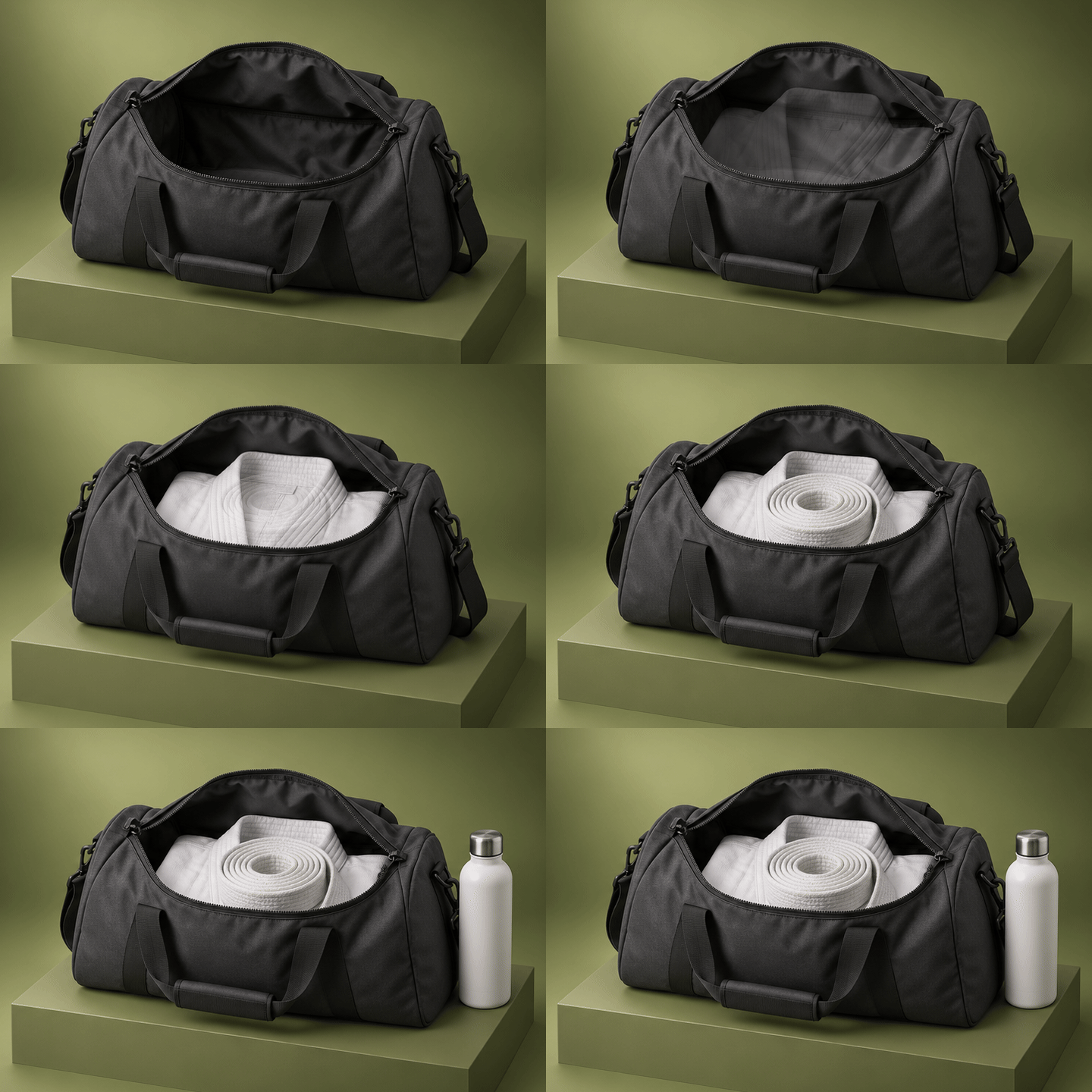
Packing a few items makes the session more comfortable. Start with a water bottle, since classes are physically demanding. Bring flip-flops or slides to wear off the mat, which keeps your feet clean and the mats cleaner. A small towel is useful for wiping sweat during breaks, and a hair tie helps if you have long hair.
Include a spare T-shirt for after class, as you will likely want to change before heading home. A separate bag for sweaty kit keeps the rest of your things clean. Leave valuables at home so you can focus on training rather than your belongings.
When to buy your own gi
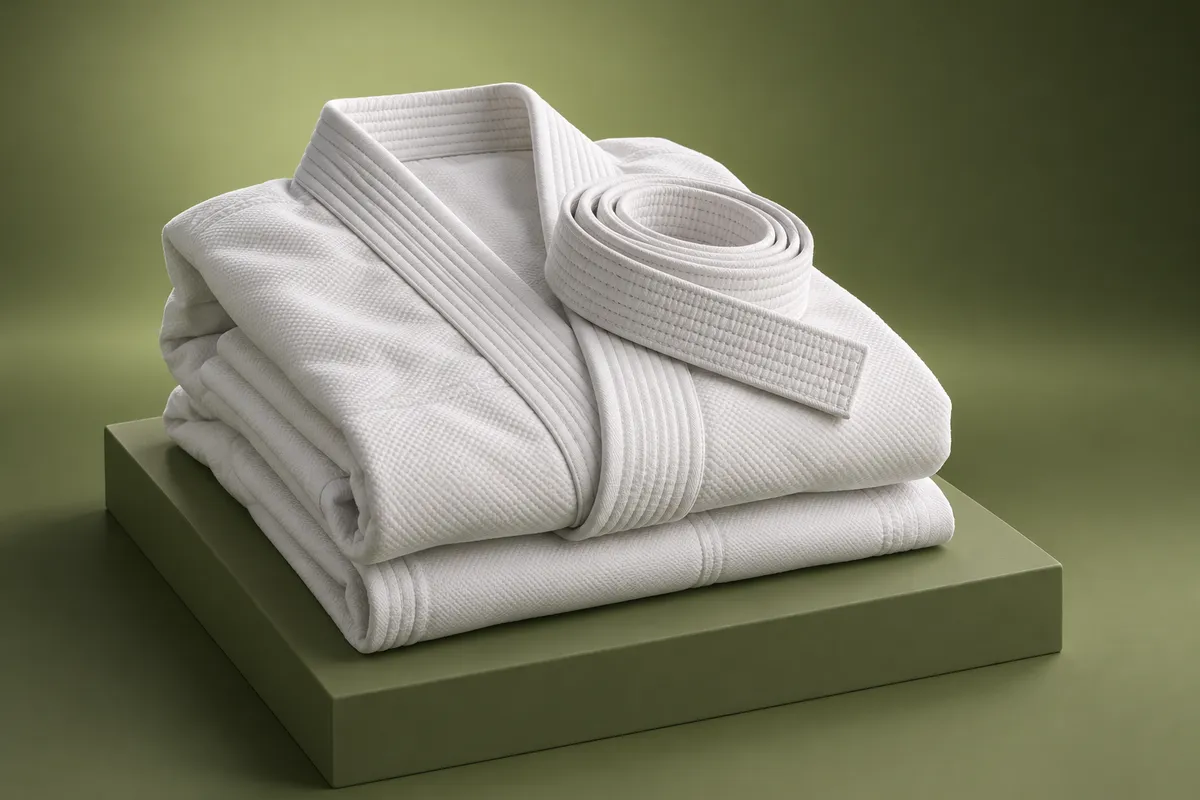
Buying your own gi is best done after a few classes, once you know you will continue. Before you order, check with your academy about its colour and patch rules. White is generally the safe default, as it is widely accepted. A set that includes a belt can simplify the start, such as the First BJJ Gi Starter Set, listed as a cotton blend with a white belt in the title.
Another option in the beginner range is the Beginner Essential BJJ Gi, listed as a 380 GSM 100% cotton weave. If you are buying for a child, a child's first gi uses kids' M size labels, and the kids' gis for a child's first class are a separate range. Confirming the academy's rules first helps you make an informed choice.
Sizing a first gi you have not tried on
Sizing a gi you have not tried on takes a little care. Adult sizes typically use labels such as A0 to A5, women's cuts often use F labels, and kids' sizes use M labels. These labels vary between brands, so check each brand's own size chart. Measure your height and weight, since most charts ask for these.
Compare your measurements against the brand's chart to find the best fit. If you are between sizes, many people choose the larger size, because cotton can shrink in hot water in general. Washing the gi in cold water helps keep the fit consistent over time.
Frequently Asked Questions
What should I expect at my first BJJ class?
Expect a structured class that usually starts with a warm-up. The class then moves to a drilling section where you practise specific movements with a partner. Some classes include light positional practice, but this varies by academy. The coach explains each part, and you can sit out any section if you are unsure. Arrive early to sign any forms and settle in.
What should I bring to my first BJJ class?
Bring a water bottle, flip-flops or slides for off the mat, a small towel and a hair tie if you have long hair. Add a spare T-shirt for after class and a bag for your sweaty kit. If the class is a gi class and you have arranged a loaner, you do not need to bring a gi. These items keep you comfortable during and after the session. Leave valuables at home.
How do I prepare for my first BJJ class?
Check with your academy whether the class is gi or no-gi and whether loaner gis are available. Trim your nails to avoid scratching partners, and eat lightly a few hours before class so you do not feel too full. Arrive early to sign any forms and meet the coach. Bring a water bottle and a small towel so you stay comfortable throughout.
Is it normal to feel nervous before a first BJJ class?
Yes, it is normal to feel nervous before a first class. Everyone starts as a beginner, and coaches and training partners understand this. Tell the coach it is your first session, and they will give you extra guidance. Partners usually go easy on new students, so focus on watching and listening. The nerves fade quickly once you have been a few times.
Conclusion
Your first BJJ class needs very little kit: fitted clothes or a borrowed gi, water, flip-flops and a towel. Ask the academy whether the class is gi or no-gi before you go. Buy your own gi only once you know you will continue and the academy has confirmed its colour rules. When you do, size it from the brand's own chart rather than a label you have worn before.


