


A female BJJ gi size chart maps F labels, usually F1 to F5, to height and weight ranges, sometimes with jacket and sleeve lengths. Measure yourself, use that brand's own chart rather than another brand's, and if you fall between sizes, look at sleeve and pant length before going up. Women's gis are generally cut shorter and narrower than unisex gis. Knowing how to read the chart is what turns a label into a gi that fits on the mat.
Key Takeaways
- F size labels: F1 to F5 usually mark women's cuts, with F1 the smallest and F5 the largest in a brand's range.
- Measurements needed: Height and weight are the usual columns, and some charts add chest, waist, jacket, sleeve or pant inseam.
- Reading the chart: Start with height, then weight, and use the extra columns to settle between two possible sizes.
- Brand-specific charts: Every brand cuts and labels differently, so always use the chart of the brand you are buying from.
- Between sizes: Compare sleeve length, then jacket length, then pants, before deciding whether to go up a size.
- Washing matters: Cotton can shrink in hot water or a hot dryer in general, so wash cold and follow the care label.
Table of Contents
- What F size labels mean
- The measurements a chart asks for
- Reading a female gi size chart step by step
- F sizes vs A sizes
- Between two sizes
- Washing and shrinkage in general
- Frequently Asked Questions
What F size labels mean
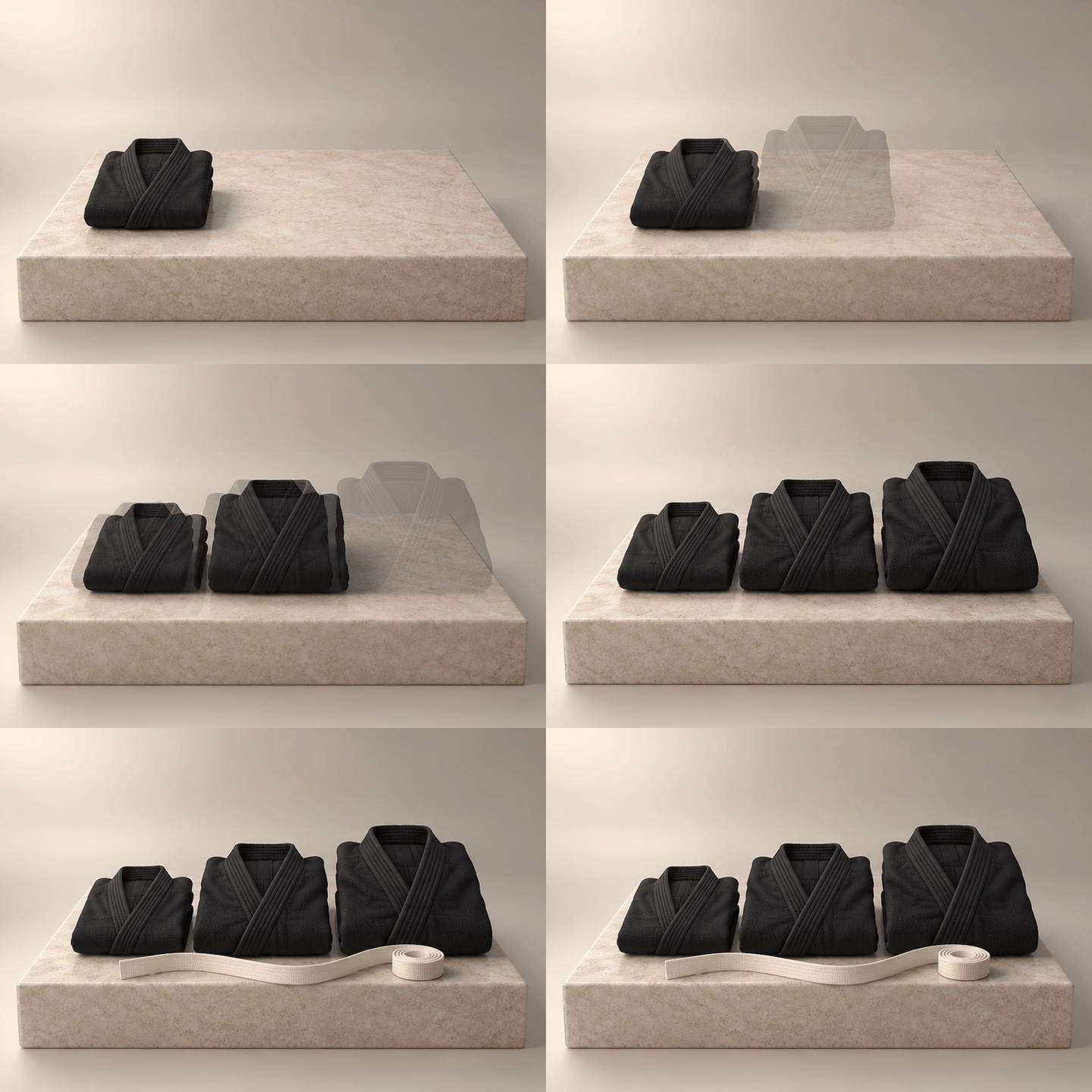
F size labels, such as F1 to F5, are used for women's cuts of the gi. These labels are a brand's own grouping and do not follow a shared measurement standard. F1 is generally the smallest size and F5 the largest. Women's gis are cut shorter and narrower than unisex or men's cuts, and the wider guide to choosing a women's jiu jitsu gi explains the cut in more detail.
F sizes are shaped around typical female proportions, including a shorter torso and narrower shoulders. That means a women's cut can fit more comfortably than a men's gi at the same height and weight, and it leaves less spare fabric at the sleeves and hem. Always read the brand's chart to see how it defines each F size.
Some brands add sizes beyond F5 to cover a wider range of body types. These extra sizes are not standard either, so check the specific chart, and remember that the women's BJJ gis listings each show their own size options.
The measurements a chart asks for
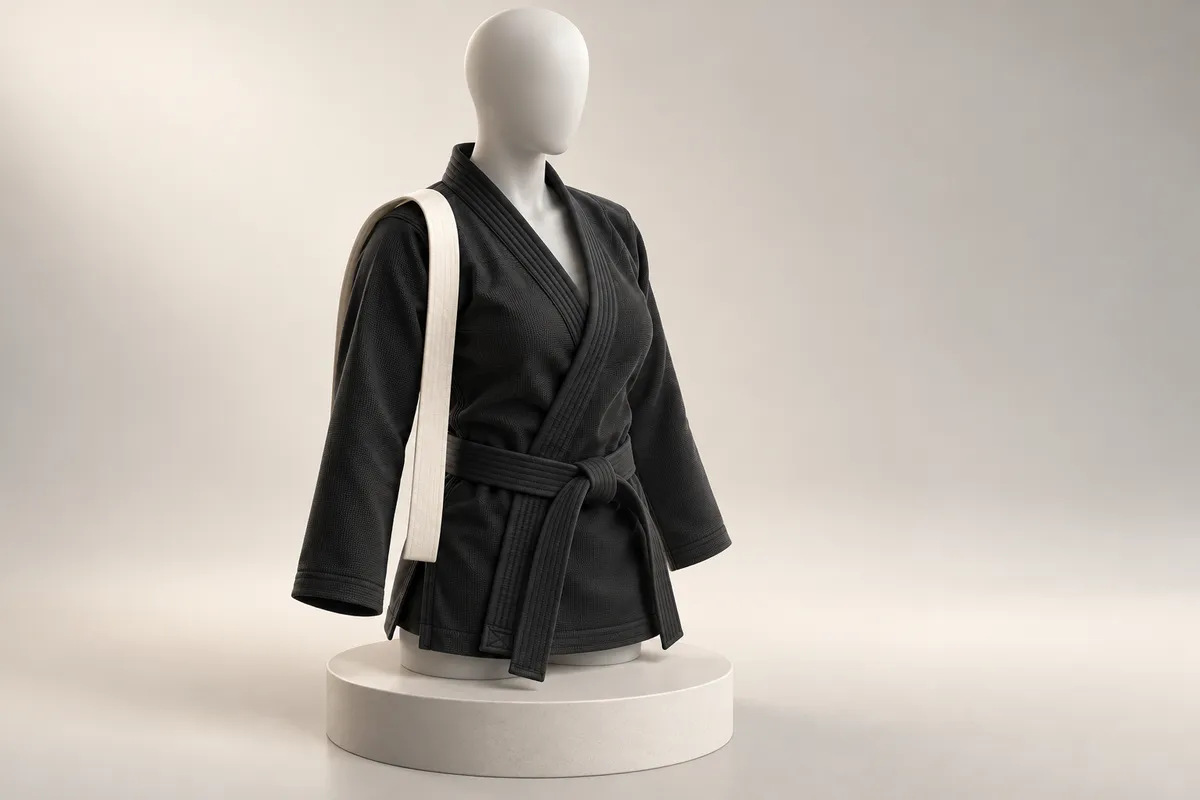
Most women's gi charts ask for height and weight, as these are the simplest measurements to take. Some brands add chest, waist, jacket length, sleeve length and pant inseam for a more precise fit. Measure in light, fitted clothing so the numbers are accurate. For arm length and inseam, it helps to have someone assist you.
Height and weight are the main factors, but the extra measurements help when your build is not average for your height. If you have a longer torso or longer arms, look closely at the jacket and sleeve columns. If you have a smaller waist, check whether the pants use an adjustable drawstring. Write your measurements down before you start shopping so you do not need to re-measure each time.
Always use the specific brand's chart, because brands differ in measurements and labels. Many charts give a range for each size, so choose the size whose range best fits your numbers, even if you sit near the top or bottom of it.
Reading a female gi size chart step by step
- Find your height row: Start by locating your height on the chart, which most charts list down one column.
- Check your weight: Move across to the weight column to see which size your weight points to.
- Look at the extra columns: If height and weight point to different sizes, check sleeve and jacket length to decide.
- Read the listing notes: Many listings add notes about the cut and care, which can change which size suits you.
- Ask if unsure: If you are still unsure, contact the seller or ask a training partner who wears that brand.
Following these steps in order keeps the decision simple. Most of the time the height and weight rows agree, and the extra columns only matter when they do not.
F sizes vs A sizes
F sizes and A sizes are different labelling systems, and they do not convert one-to-one. F sizes are designed for women, usually with a more tapered cut. The Women's Essential BJJ Gi, for example, is listed as a 350 GSM weave with a women-specific tapered cut. Taller or broader-shouldered women sometimes find an A size fits better, so compare both charts from the same brand.
A sizes are adult or unisex sizes, typically labelled A0 to A5. They are cut for a wider range of body types, so women who prefer a looser fit or have a broader frame may find an A size comfortable. The Women's BJJ Gi in black micro pearl weave is listed as a 380 GSM micro pearl weave jacket with 275 GSM cotton pants; check each listing for its size options.
The best way to decide is to try both if you can, or to compare the two charts side by side. Consider your body shape and how you like a gi to sit before you choose.
Between two sizes
If you are between two sizes, start by comparing sleeve length. The sleeves should end near your wrist when your arms are extended forward. Next, check that the jacket length covers your hips. Finally, check the pant length and waist: the pants should reach near your ankles and sit comfortably at the waist.
A slightly larger size gives room to move and allows for cotton shrinking a little in general. However, very baggy sleeves give your training partners easy grips. Cold washing and following the care label help keep the fit you chose. If you are still unsure, ask the seller.
If the larger size is only slightly bigger on the chart, it is often the better choice. If it is much larger, the smaller size may suit you better.
Try the gi on with the belt tied, since the belt changes how the jacket sits. Raise your arms and kneel to check that the jacket stays over your hips. Check the pants when you squat, not only when you stand. If a training partner wears the same brand, ask how their size runs.
Washing and shrinkage in general
Cotton gis can shrink in hot water or a hot dryer in general. A pre-shrunk label reduces the chance but does not remove it. To limit shrinkage, wash your gi in cold water and air dry it rather than using a dryer. Follow the care label, and check the fit again after the first few washes.
Good care keeps a gi comfortable and keeps the size you chose. Avoiding hot water and high heat is the simplest step you can take.
The first few washes are when a new cotton gi is most likely to change in general. Wash it before you sew on any patches or hem the pants. Dry it flat or on a hanger away from heat. If the fit changes, compare it against the chart again before deciding it is the wrong size.
Frequently Asked Questions
What if I am between BJJ gi sizes?
If you are between sizes, compare sleeve length first, then jacket length over the hips, then pant length and waist. A slightly larger size gives room to move and allows for some shrinkage in general. Very baggy sleeves, though, give your training partners easy grips. Cold washing and following the care label help keep the fit. If you are still unsure, ask the seller for advice.
Do all brands' gis fit the same?
No, each brand cuts and labels its gis differently. An F2 in one brand may fit like a different size in another. Always use the size chart of the brand you are buying from. Comparing charts across brands shows how much they vary. Your own measurements are the constant to work from.
How should a BJJ gi fit?
A BJJ gi should fit so that the jacket skirt covers your hips, the sleeves end near your wrists with your arms forward, and the lapels cross without gaping. The pants should reach near your ankles, and the drawstring should hold them securely. A well-fitting gi lets you train without adjusting it between rounds. Check the brand's own chart for the details.
Is there a plus-size women's BJJ gi?
Some brands extend their F sizes or offer larger A sizes. Compare the largest sizes on the brand's chart with your own measurements. If the F range stops short, a unisex A size can work well. Check each listing for the sizes available and any fit notes. A seller can also tell you how a size runs.
Conclusion
Choosing the right size starts with your own measurements and the brand's own chart. Read a female BJJ gi size chart by height first, then weight, then the extra columns. If you are between F and A sizes or between two F sizes, compare sleeves, jacket and pants before you decide. Then wash cold and air dry to keep the fit you chose.


