


The gi vs no gi question starts with what you wear. Gi BJJ is trained in a jacket, pants, and belt, allowing you to grip the collar, sleeves, and pants, which slows the pace and adds many grip-based techniques. No-gi BJJ is trained in a rash guard and shorts or spats, making it faster and more reliant on body grips. Many students train both, each offering unique benefits and challenges.
Key Takeaways
- Gi BJJ requires a gi jacket, gi pants, and a belt, while No-gi BJJ uses a rash guard and shorts or spats.
- Grips in gi BJJ include the collar, lapel, sleeves, and pants, while no-gi BJJ relies on body grips like the neck, wrists, and limbs.
- Pace in gi BJJ is generally slower and more methodical, whereas no-gi BJJ is faster and more dynamic.
- Rules for competitions can vary by federation; check the current rules of your specific event.
- Beginners should consider the academy's class schedule and their personal preferences when deciding whether to start with gi or no-gi.
- Kit for gi BJJ starts with a well-fitting gi, while no-gi BJJ begins with fitted athletic wear.
Table of Contents
- Gi vs no-gi in one minute
- What you wear to each class
- Grips and techniques
- Pace and training feel
- Rules and competitions
- Which should you start with?
- What to buy first for gi classes
- Frequently Asked Questions
Gi vs no-gi in one minute
| Gi BJJ | No-gi BJJ | |
|---|---|---|
| What you wear | Gi jacket, gi pants and belt | Rash guard with shorts or spats |
| Grips | Collar, lapel, sleeves and pants | Wrists, neck, body and limbs |
| Pace | Usually slower and more methodical | Usually faster and more scrambly |
| What to buy first | A gi that fits; a belt is often included or given by the academy | Fitted athletic wear; ask the academy first |
What you wear to each class
Gi BJJ
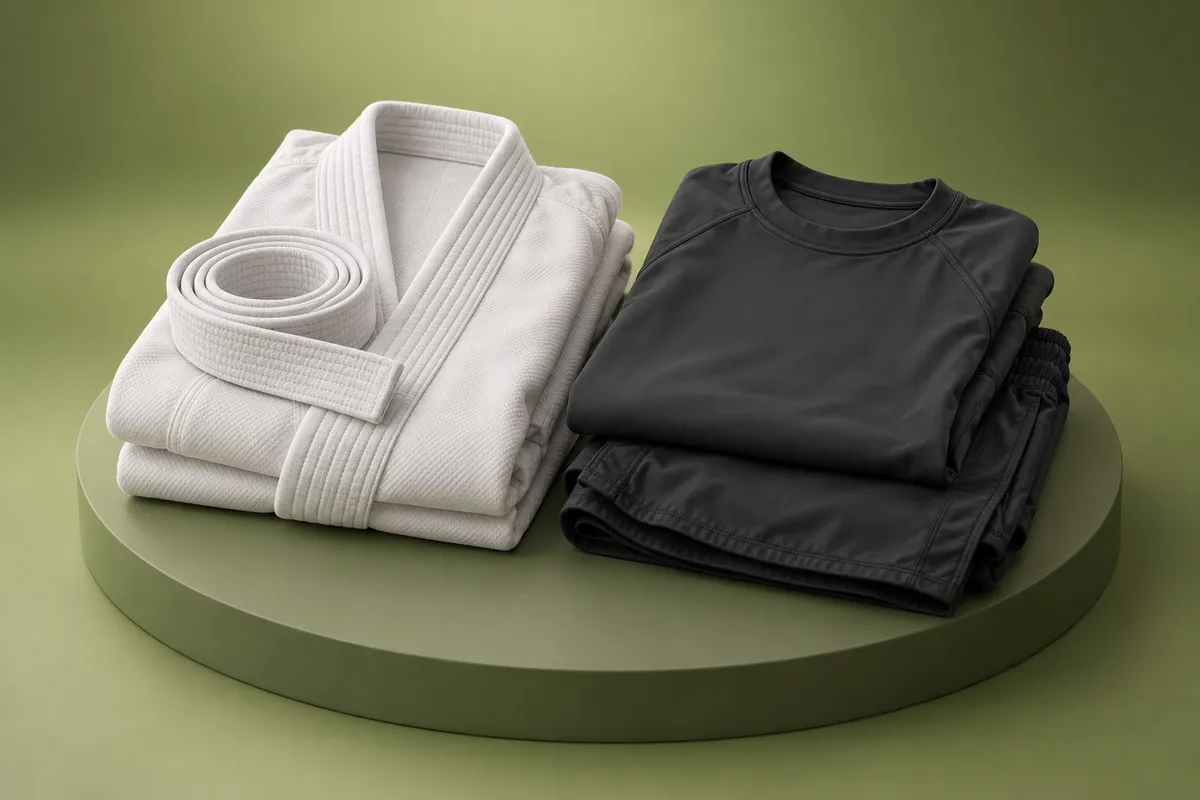
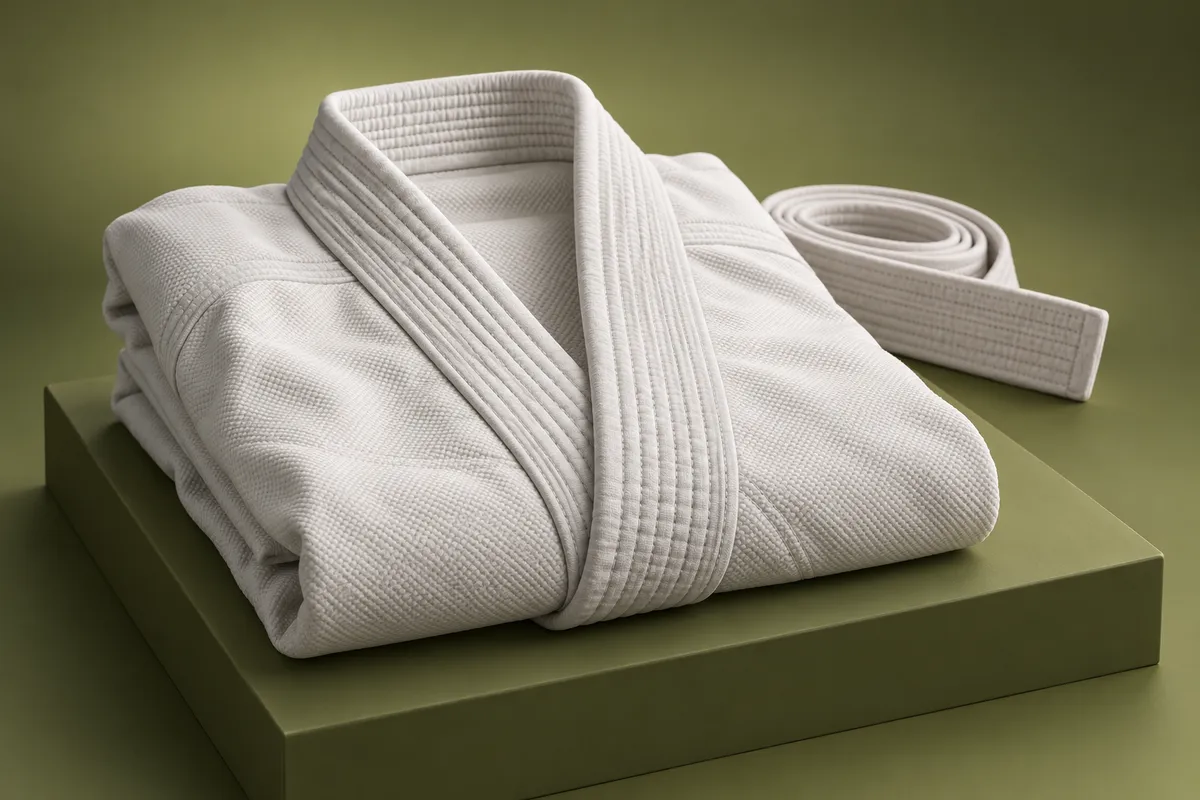
In gi BJJ, the primary garment is the gi, which consists of a jacket, pants, and a belt. The gi is made of a heavy, durable material, typically cotton, designed to withstand the rigors of training. The jacket features a reinforced collar and thick sleeves to allow for gripping. The pants are loose-fitting and made to be durable. The belt is used to hold the jacket closed and is often color-coded to indicate rank.
No-gi BJJ
No-gi BJJ, on the other hand, is practiced in more form-fitting athletic wear. The main components are a rash guard and grappling shorts or spats. The rash guard is a tight-fitting top that limits mat burn and does not give fabric to grab. Grappling shorts are similar to athletic shorts but are made from a tougher material to resist tearing. Spats are leggings that cover the legs and are often used in combination with a rash guard.
What to Wear and What to Borrow
What to Wear
- Gi BJJ: Gi jacket, gi pants, belt
- No-gi BJJ: Rash guard, grappling shorts or spats
What You Can Usually Borrow or Ask the Academy About
- Gi BJJ: Loaner gi (some academies provide them), loaner belt
- No-gi BJJ: Loaner rash guard, loaner grappling shorts or spats
What to Buy First
- Gi BJJ: A well-fitting gi from the first BJJ gis; check the product listing for details and your academy for color rules
- No-gi BJJ: Fitted athletic wear; ask the academy first
Grips and techniques
Gi BJJ
The gi introduces a wide range of grip-based techniques that are not available in no-gi. Common grips include the collar (or lapel), sleeves, and pants. These grips can be used to control your opponent, set up submissions, and create leverage. Techniques like the collar choke, sleeve control, and various sleeve-and-pants combinations are staples of gi BJJ, and the BJJ gi and no-gi terms page explains each grip by name. The gi's material and design allow for a more methodical and technical approach to training, as the added friction and resistance slow down the pace of the match.
No-gi BJJ
In no-gi BJJ, the focus shifts to body grips and positional control. Common grips include the neck, wrists, and limbs. Since there is no fabric to grab, techniques often rely on controlling your opponent's body directly. Submissions like the rear-naked choke, armbar, and kimura are executed using the natural contours of the body and the leverage provided by the tighter-fitting attire. This style of training is generally faster and more dynamic, requiring quick reflexes and a high level of athletic ability.
Pace and training feel
Gi BJJ
Gi BJJ is generally slower and more methodical. The additional material of the gi creates more friction and resistance, making it harder to move quickly. This slower pace allows for more detailed technical work and a deeper exploration of positions and transitions. Practitioners often spend more time setting up their techniques, which can lead to a more strategic and thoughtful approach to the sport. The emphasis on grip-based techniques also means that gi BJJ can be particularly challenging for beginners, as they need to learn how to effectively use and defend against various grips.
No-gi BJJ
No-gi BJJ is typically faster and more dynamic. The absence of the gi means there is less resistance, allowing for quicker movements and more scrambles. This faster pace can be more intense and physically demanding, often requiring a higher level of cardiovascular fitness. The focus on body control and direct physical engagement means that no-gi BJJ can be more physically exhausting, but it also provides a different set of challenges and opportunities for growth. Many practitioners find that no-gi training helps improve their overall athleticism and agility.
Rules and competitions
Gi BJJ
The rules for gi BJJ are outlined in the rulebooks of various organizations, such as the International Brazilian Jiu-Jitsu Federation (IBJJF). These rules cover everything from legal grips and techniques to the scoring system and weight classes. The IBJJF publishes its own rulebook with specific guidelines for gi and no-gi divisions. For example, certain submissions and takedowns may be legal in gi but not in no-gi. It's important to familiarize yourself with the specific rules of the organization hosting your competition.
No-gi BJJ
No-gi BJJ is also governed by federations like the IBJJF and the ADCC (Abu Dhabi Combat Club). The ADCC is particularly known for its submission grappling events, which often feature no-gi matches. The rules for no-gi BJJ can vary by event and edition, so it's crucial to check the current rulebook of the specific competition you plan to participate in. The ADCC, for instance, has its own set of rules and guidelines that differ from those of the IBJJF. Understanding these rules is essential for both training and competing effectively.
Which should you start with?
Academy Timetable
The best way to decide whether to start with gi or no-gi is to look at your academy's class schedule. Many academies offer both gi and no-gi classes, and some may have a preference for one over the other. If your academy has more gi classes, it might be a good idea to start with gi. Conversely, if no-gi classes are more prevalent, starting with no-gi could be beneficial. Additionally, some academies may have specific requirements or recommendations for beginners, so it's a good idea to check with your instructors and read what to wear to your first BJJ class before you go.
Personal Preference
Ultimately, the choice should also reflect your personal preferences. If you enjoy the technical and methodical nature of gi BJJ, starting with gi might be more rewarding. If you prefer a faster pace and more dynamic training, no-gi could be a better fit. Many students eventually train in both, as each style offers unique benefits and challenges. Consider what type of training environment you find most engaging and motivating, and choose accordingly.
What to buy first for gi classes
Fit and Weave
When buying your first gi, the most important factors are fit and weave. A well-fitting gi should be comfortable and not too loose or tight. The weave of the gi affects its durability and comfort. Common weaves include single weave, double weave, and pearl weave. The Beginner Essential BJJ Gi, listed as 380 GSM 100% cotton, is one option to compare. Check the product listing for the specific details and your academy for any color rules or requirements.
Academy Customs
Before buying a gi, check with your academy for any specific customs or requirements. Some academies have color or patch requirements, and some may provide a belt as part of your training. The First BJJ Gi Starter Set, listed as a lightweight cotton blend, includes a white belt, which can be a good option if your academy does not provide one.
Planning Your Budget
Many students end up owning both gi and no-gi kits as they progress in their training. It's a good idea to start with one gi for the class you attend most frequently, whether from the beginner range or the women's BJJ gis, and add a second kit later as your training needs evolve. This approach allows you to focus on the essentials and gradually build your equipment collection as you become more involved in the sport.
Frequently Asked Questions
What is gi in jiu jitsu?
The gi is a traditional uniform used in Brazilian Jiu-Jitsu, consisting of a heavy cotton jacket, pants, and a belt. It is designed to withstand the rigors of training and allows for a wide range of grip-based techniques. When you train in a gi, you can practice techniques that involve grabbing and manipulating the fabric, which can be useful in both self-defense and competition.
What does no-gi stand for?
No-gi stands for "no gi," which means training without the traditional BJJ uniform. In no-gi BJJ, practitioners wear a rash guard and grappling shorts or spats. This style focuses on body grips and submissions rather than fabric-based techniques, making it faster and more dynamic. Ask your academy whether no-gi classes have a dress code before your first session.
Should a beginner train gi or no-gi first?
The choice between gi and no-gi training depends on your academy's class schedule and your personal preferences. If your academy has more gi classes, starting with gi might be beneficial as it can help you develop a strong foundation in technical skills. If you prefer a faster pace and dynamic training, no-gi could be a better fit. Regardless, many beginners eventually train in both to gain a well-rounded skill set.
Should you train in both gi and no-gi?
Training in both gi and no-gi can provide a well-rounded BJJ experience. Gi training develops technical skills and grip-based techniques, while no-gi training enhances speed, agility, and body control. Many students find that training in both styles improves their overall BJJ proficiency and helps them adapt to different opponents and scenarios.
What is gi vs no gi BJJ?
Gi BJJ is practiced with a traditional uniform (gi) that includes a jacket, pants, and a belt, allowing for grip-based techniques. No-gi BJJ is practiced in a rash guard and grappling shorts or spats, focusing on body grips and submissions. Each style has its own unique rules, techniques, and training pace, and the choice between them often depends on the event organizer's regulations and your personal training goals.
Conclusion
In the gi vs no gi choice, each style offers distinct benefits and challenges. Gi BJJ is slower and more technical, while no-gi BJJ is faster and more dynamic. Consider your academy's class schedule and personal preferences when making your decision. Remember to invest in a well-fitting gi if you start with gi classes, and check your academy's requirements. Many students eventually train in both styles to develop a well-rounded skill set.


